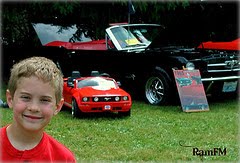
The driver of tomorrow is not thinking Green...

The driver of tomorrow is not thinking Green...
He's thinking Classic. (click on photo)

Followers

Sep 15, 2009

An answer to the Thermostat dillemma!

Focus on the Family
Understanding and Accepting Your Mate's Differences

We need to appreciate each other's uniqueness if we hope to live together in harmony.
by James Dobson, Ph.D.

The Gender Gap

My wife, Shirley, and I have been blessed with a wonderful relationship. She is my best friend, and I would rather spend an evening with her than with anyone else on earth. But we are also unique individuals and have struggled at times with our differences.

Our most serious conflict has raged now for forty-plus years, with no solution in sight. The problem is that we operate on entirely different internal heating mechanisms. I am very hot-blooded and prefer a Siberian climate. Shirley has ice in her veins and shivers even in warm surroundings. She has concluded that if we can have only one flesh between us, she's going to make it sweat! She will slip over to the thermostat at home and spin the dial to at least eighty-five degrees. All the bacteria in the house jump for joy and begin reproducing like crazy. Within a few minutes I start to glow and begin throwing open doors and windows. This ridiculous tug-of-war has been going on since our honeymoon and will continue till death do us part. In fact, there have been a few times when I thought death would part us over this difficulty!

What is interesting to me is how many other husbands and wives struggle with this problem. It also plagues men and women who fight over the office thermostat. Why is temperature such a pressure point? Because women typically operate at a lower rate of metabolism than men. This is only one of the countless physiological and emotional differences between the sexes that we must understand if we hope to live together in harmony.

Genesis tells us that the Creator made two sexes, not one, and that He designed each gender for a specific purpose. Take a good look at male and female anatomy and it becomes obvious that we were crafted to "fit" together. This is not only true in a sexual context but psychologically as well. Eve, being suited to Adam's particular needs, was given to him as a "help-meet." Man and woman were each divinely fashioned to complement the other.
We're Not Alike

Even a cursory examination of our biological differences can give us a greater appreciation for the unique and wonderful way we are made. Here is a quick rundown of a few:

1. Men and women differ in every cell of their bodies. This is because each carries a different chromosome pattern that is the basic source of their maleness or femaleness.
2. Women have greater constitutional vitality, perhaps because of this chromosome difference. Normally, women in the United States outlive men by three or four years.
3. Men have a higher rate of basal metabolism than women.
4. The sexes differ in skeletal structure, woman having a shorter head, broader face, less-protruding chin, shorter legs, and longer trunk. The first finger of a woman's hand is usually longer than the third; with men the reverse is true. Men's teeth typically last longer than do those of women.
5. Women have a larger stomach, kidneys, liver and appendix, and have smaller lungs.
6. Women have three important physiological functions totally absent in men — menstruation, pregnancy, and lactation. Each of these significantly influences behavior and feelings. Female hormonal patterns are more complex and varied than male. The glands work differently in the two sexes. For example, a woman's thyroid is larger and more active; it enlarges during menstruation and pregnancy, which makes her more prone to goiter, and is associated with the smooth skin, relatively hairless body, and thin layer of subcutaneous fat that are important elements in the concept of personal beauty. Women are also more responsive emotionally, laughing and crying more readily.
7. Women's blood contains more water (20 percent fewer red cells). Since red cells supply oxygen to the body, she tires more easily and is more prone to faint. Her constitutional viability is therefore strictly a long-range matter. When the working day in British factories under wartime conditions was increased from ten to twelve hours, accidents involving women increased 150 percent; the rate of accidents among men men did not increase significantly.
8. Men are 50 percent stronger than women in brute strength.
9. Women's hearts beat more rapidly (eighty vs. seventy-two beats per minute on average); blood pressure (ten points lower than men) varies from minute to minute; but they have less tendency to high blood pressure -- at least when the comparison is to women who have not yet experienced menopause.
10. Female lung capacity is about 30 percent less than in males.
11. Women can withstand high temperature better than men because their metabolism slows down less.1

And Even More Differences

In addition to these physiological differences, the sexes are blessed with a vast array of unique emotional characteristics. It is a wise and dedicated husband who desires to understand his wife's psychological needs and then sets out to meet them. Is she a morning person? If not, bring her a cup of coffee to help her start the day. Does she want to talk the moment she opens her eyes? It is unlikely -- but if she feels that way, set aside a few minutes each morning for casual conversation. An observant man can discover countless ways to serve and warm the heart of his wife.

The emotional differences between you and your partner will influence every aspect of your relationship. Briefly stated, in women, love is linked to self-esteem. For a man, romantic experiences with his wife are warm and enjoyable and memorable -- but are not considered necessary. For a woman, they are her lifeblood. Her confidence, her sexual response, and her zest for living are often directly related to those tender moments when she feels deeply loved and appreciated by her man. That is why flowers and candy and cards are more meaningful to her than to him. This is why she is continually trying to pull him away from the television set or the newspaper, and not vice versa. This is why the anniversary is critically important to her and why she never forgets it. That is why he had better not forget it!

This need for romantic love is not some quirk or peculiarity of the wife, as some husbands may think. It is the way God designed the human female, and the sooner men understand this, the better they will be equipped to increase the level of intimacy in their marriages.

Men also need to realize that women tend to care more about the home and everything in it. I don't know whether your wife or fiancee has a nesting instinct, but for years I have observed this feminine interest in the details of the family dwelling. Admittedly, not every woman lives in a neat house. I know some messy ladies whose mothers must have been frightened by garbage trucks when they were pregnant! Yet even these women show a genuine concern for their house and what is in it. Husbands sometimes fail to comprehend the significance of this female inclination.

Shirley and I recognized that we had differing perspectives several years ago when we purchased a gas barbecue unit for use in our backyard. We hired a plumber to install the device and left for the day. When we returned, we both observed that the barbecue was mounted about eight inches too high. Shirley and I stood looking at the appliance, and our reactions were quite different.

I said, "Yes, it's true. The plumber made a mistake. The barbecue is a bit too high. By the way, what's for dinner tonight?"

Shirley reacted more emphatically. "I don't think I can stand that thing sticking up in the air like that!"

I could have lived the rest of my life without ever thinking about the barbecue mounting again, but to Shirley it was a big deal. Why? Because we see the home differently. So we called the plumber and had him lower the unit about eight inches.

Husbands aren't the only ones who need to be aware of their partners' needs, of course. I suggest that wives tune in to their husbands' quirks and interests as well. For example, a survey taken several years ago to determine what men care about most yielded surprising results. Men did not long for expensive furniture, well-equipped garages, or a private study. What they wanted most was tranquility at home. Competition in the workplace today is so fierce, and the stresses of pleasing a boss and surviving professionally are so severe, that the home needs to be a haven to which a man can retreat. It is a smart woman who tries to make her home what her husband needs it to be.

Of course, many women also work, and their husbands are not the only ones in need of tranquility. This is a major problem in two-career families. It is even more difficult in the single-parent situation. I know no simple solution to those stress points, although I'm convinced that emotional instability and even physical illness can occur in the absence of a "safe place." Creating an environment at home to meet that need should be given priority, regardless of the family structure.

Well, so much for this short discourse on gender distinctiveness. I have attempted to show not only that males and females are different -- which any bloke can see -- but also that God authored those differences and we should appreciate them. It is our uniqueness that gives freshness and vitality to a relationship. How boring it would be if the sexes were identical! How redundant it would have been for the Creator to put Adam to sleep and then fashion yet another man from his rib!

No, He brought forth a woman and gave her to Adam. He put greater toughness and aggressiveness in the man, and more softness and nurturance in the woman -- and suited them to one another's needs. And in their relationship, He symbolized the mystical bond between the believer and Christ Himself. What an incredible concept!

I say to you, husbands and wives, celebrate your uniqueness and learn to compromise when male and female individuality collide. Or as an unnamed Frenchman once said, "Vive la difference!" He must have been a happily married man.
From Love for a Lifetime, published by Multnomah Gifts. Copyright © 2003, James Dobson, Inc. All rights reserved. International copyright secured. Used by permission.
1Taken from Dr. Paul Popenoe, "Are Women Really Different?" Family Life 31 (February 1971).

Sep 14, 2009

Sunday's message

I have to tell you, if you are looking for a great pastor to listen to, Maltby Christian Assembly has 2 of the best. Pastor David, the lead pastor is genuine. I truly love listening to his sermons. His goal I think is really getting people to narrow it down to the one thing that's important - following Christ. Simple eh? :)

The young adult pastor, Justin Farley is a talented guy. He's young, hip and hilarious. He delivers his message from the gate getting you to laugh out loud and then turns it to the heart of the message softly, you quiet down as the words sink in to your psyche and heart. He reaches the kids where they are, with what they struggle with and an open genuine heart of a young adult who's "been there".

Yesterdays sermon was no exception. And boy, it was delivered lock & key right to where I've been dwelling lately.

You can download the messages in to ITunes from their website -

http://mcaweb.org/index.php?s=rs&nid=103097

I wrote down a few sentences that got my attention yesterday - here's a couple:

This is a quote from John Wooden, former UCLA basketball coach

"Don't let what you can't do, keep you from doing what you can do." I know I struggle with this all the time. Fear of failure is deep.

He spoke of Mother Teresa, how her life started. She committed herself to being a Nun for life at a young age. Her birth name was Agnes. She had a vision to open a orphanage and was ridiculed by her fellow sisters. Against the ridicule, she followed the fire placed on her heart by God. Justin's message said that sometimes that FIRE which burns inside you, is placed there by Him, so that maybe you'll ACT on it and complete His plan for your life. Wow, that really hit me hard because it was verbalization of the same words that had been spinning through my mind lately.

Justin said when he sees people like this he feels 3 things - first, inspiration. Followed by Intimidation. Finally Doubt. I add that this leads to non performance. Giving Up. What you can't do - and fear of failure or ridicule - keeps you from doing whatever it is that you can do.

Here I sit, guilty as charged. Yet... I am spreading the message in hopes it reaches someone else today and spurs action.

Have a great day -

Sep 8, 2009

Psalm 46:10 & Meditation

I googled this verse as a friend referenced it (thank you Lenny) and found this site. I thought it was very interesting.

http://www.christiananswersforthenewage.org/Articles_MeditationPsalm.html

Does "be still" mean to meditate or practice contemplative prayer?

Many people quote the first part of Ps. 46:10, "Be still and know that I am God," to endorse a form of meditation that involves techniques on "quieting" the mind or going beyond the mind. Is this what this verse is talking about?

As always, one must look at the whole passage and see the context of the statement, especially since the Bible was not written in verses; chapters and verses were added centuries later. In one translation, the phrase is not "Be still" but "Cease striving." The New American Standard has, "Cease striving and know that I am God; I will be exalted among the nations, I will be exalted in the earth." Young's Literal renders it, "Desist, and know that I [am] God, I am exalted among nations, I am exalted in the earth."

The context is a reprimand about submitting to God in the midst of nations warring against God. The 1599 Geneva Study Bible's comments on verse 10 say that God is warning those "who persecute the Church to cease their cruelty: for also they will feel that God is too strong for them against whom they fight." This is because the preceding two verses say:

"Come, behold the works of the LORD, Who has wrought desolations in the earth.
He makes wars to cease to the end of the earth; He breaks the bow and cuts the spear in two; He burns the chariots with fire."

This is clearly talking about the power and might of God to the nations who have disregarded Him.

Another commentary renders the literal meaning of verse 10 as: "Leave off to oppose Me and vex My people. I am over all for their safety." This is a warning from God to His enemies (Robert Jamieson, A. R. Fausset and David Brown, Commentary Critical and Explanatory on the Whole Bible (1871), http://bible.crosswalk.com/Commentaries/JamiesonFaussetBrown/jfb.cgi?book=ps&chapter=046.

Matthew Henry's words on verse 10 are that it means "Let his enemies be still, and threaten no more, but know it, to their terror, that he is God, one infinitely above them, and that will certainly be too hard for them; let them rage no more, for it is all in vain" (http://www.blueletterbible.org/tmp_dir/c/1068777164-1577.html).

Charles H. Spurgeon's remarks on verse 10 are "Hold off your hands, ye enemies! Sit down and wait in patience, ye believers! Acknowledge that Jehovah is God, ye who feel the terrors of his wrath! Adore him, and him only, ye who partake in the protection of his grace" (from The Treasury of David, (http://bible.crosswalk.com/Commentaries/TreasuryofDavid/tod.cgi?book=ps&chapter=046&verse=010).

The earlier verses in chapter 46 tell those who trust in the Lord not to fear:

"Therefore we will not fear, though the earth should change; And though the mountains slip into the heart of the sea; Though its waters roar {and} foam, Though the mountains quake at its swelling pride."

Why not fear? Because God is there and He is mighty. Therefore, the passage goes on to say, those who fight against God should cease and realize His might, and that He will be exalted over all. Verse 10 is a warning to those warring on God; it is a rebuke.

From the context of the passage, without even consulting commentaries, one can clearly see that verse 10 has nothing to do with meditation, but is rather a reprimand to those who are "striving" against God. They are to stop striving and realize His power, and that their efforts against God are futile.

This verse is not about becoming absolutely still to "listen" to God. There is no Biblical support in this verse or any other for practicing certain breathing techniques, for repeating a phrase over and over, for letting the mind go blank, or for going beyond thinking in order to experience a "merging" with God, as taught in spiritual techniques adapted from Buddhism for Christians, or as taught in mystical teachings usually labeled as contemplative or centered prayer.

In contrast, God's word teaches us to think and use our mind. Rational thinking and reason flow from the nature of God. We can be still or quiet, of course, in order to contemplate God and His perfect love, justice, and mercy. We can be still and appreciate His might. But we do not need to numb our brains or create a mystical experience to do so; in fact, these techniques will hinder us from practicing true contemplation.

Much confusion today comes from various meanings of the word "meditation." When we are exhorted to meditate on God's word, it means to ponder, to deeply reflect, and to contemplate the meaning of a passage. The word translated as "meditation" in several verses in the Psalms means to meditate in the sense of reflecting upon. In fact, the New Living Translation uses the word "thought" for "meditation" in several of these passages, such as in Ps. 19:14: "May the words of my mouth and the thoughts of my heart be pleasing to you." We are to seek to understand God's word with our minds, not to empty the mind, or to bypass the mind for a merging with God.

Ps. 46:10, far from endorsing a mystical meditative state, is stating to the hearers that they should be in awe of God as the Sovereign Ruler. How ironic that God's words in this verse are misused to support mystical meditation techniques when the verse itself is a rebuke to pay attention to God's might!

For more information, see other CANA articles, Contemplating Contemplative Prayer: Is It Really Prayer? and Out of Your Mind: Meditation and Visualization.

Sep 1, 2009

Caffeine & your children

Recently Kayla asked me "so when do we get to drink coffee". I looked at her and said "when you are an adult and can make that choice for yourself". Caffeine and soda pop have been pretty much off limits in our household. As parents of 5 children who have drug and alcohol addiction risks, I had read that caffeine is linked to adult addictions because of it's effect on the brain and body. It's become socially acceptable to introduce to children at young ages and causes a physical need, addiction if you will. And more, there is nothing healthy about it. My thoughts have been, in a world where it's already hard enough to sustain a "do not use" mentality, the last thing the kids need is something pumped in to their bodies for years, that can cause the brain to latch on to the "drug" and create a "need" for substance to function.

I am not one that tolerate caffeine very well. I never have. It gives me the utmost shakes and makes it difficult for me to concentrate. My anxiety or worry button is continually on anyway - so add caffeine to that - it aggravates an already increased mental state. Today I ran across this article that was very interesting. Oh.... and I have the shakes today because my granita doesn't come decaf - but it was oh so good! :)

http://www.metroactive.com/papers/sonoma/08.20.98/caffeine-9833.html

The brand names are pulsing with power: Surge, Zapped, Full Speed, Outburst. And Josta is laced with both caffeine and the pick-me-up herb guarana, which is hyped as "raw, primal power." Is it any wonder caffeine consumption is on the rise among kids?

By Helen Cordes

ANYONE REMEMBER when caffeine was off-limits for children? ("It'll stunt your growth!") These days constraints on caffeine consumption for kids and young teens are nonexistent. Kids are having caffeine early and often--high-octane Mountain Dew is the preferred soda of the under-6 set--and in much bigger doses than before. Caffeine Inc. is raking it in, often targeting teens and younger kids, and while Coca-Cola's polar bears get the attention, studies showing the negative consequences of child caffeination are virtually ignored.

Look at fast-food joints, convenience stores, and restaurants, where many kids get up to 40 percent of their meals. It's common to see young children and teens downing "big gulp"-size caffeinated sodas or lining up for seconds and thirds at refillable soda stations. These megadrinks can pack a wallop equal to three cups of strong coffee--all bombarding a body that may be one-half or two-thirds adult size. And kids are eagerly reaching for the aggressively marketed new drinks that are at or near the legal limit for added caffeine (which is 6 milligrams per ounce) such as Coca-Cola's Surge (51 milligrams in 12 ounces), Pepsi-Cola's Josta (58), Jolt (72), the caffeinated herbal drink XTC (70), and others.

And kids may get a near double-dose of caffeine if they buy these juiced-up drinks at vending machines, which increasingly offer only 20-ounce bottles instead of 12-ounce cans.

Check out school cafeterias: Kids are bypassing milk for cans of Coke (45 milligrams), Pepsi (37), Mountain Dew (55) and Sunkist (40), bought at school pop machines or served at the fast-food franchises now at 13 percent of the nation's schools. Glance at family shopping carts: Sodas are the best-selling product at grocery stores--$11.7 billion annually in sales. And four of the five most popular soft drinks in the United States are caffeinated, with No. 4 Sprite the sole exception.

The most conservative estimates have children and teens guzzling more than 64 gallons of soda a year--an amount that has tripled for teens since 1978, doubled for the 6-11 set, and increased by a quarter for under-5 tots, according to a 1994 survey by the Agriculture Department.

The top drinkers, teen boys, pop open an average of three sodas a day.

And check out the local coffee shop. For tons of teens, and kids as young as elementary school, the local Starbucks or its equivalent has become the favored hangout. Many juvenile customers scorn decaf in the sugary coffee drinks they prefer. (Twelve ounces of a regular Starbucks coffee contains around 190 milligrams of caffeine. Since coffee is naturally caffeinated--sodas have caffeine added to them--it is not regulated for caffeine content.) Caffeine is even showing up on the playing field: Competitive-minded parents are bringing along high-caffeine drinks or packets of the new carbo- and caffeine-packed "sports goo" to help give their young athletes a winner's edge.

Why is "Generation Next" (as Pepsi puts it) downing caffeine at rates never seen before? One likely reason is that most parents are unaware of the health problems associated with caffeine. Solid scientific research has linked caffeine to anxiety, respiratory ailments, possible bone loss, and other health worries--although there has been slight coverage of this.

But what turned children on to caffeine in the first place? Kids' desire to get wired didn't simply occur as a mass switch in personal preference. The major caffeine suppliers to kids have been throwing millions into advertising and giveaways. Mountain Dew, for example, has distributed half a million free pagers to kids, who can use them to call friends--but only after they read the Mountain Dew promo that automatically pops up.

The soft-drink companies have also spent tens of millions placing their products and ads where youths are a captive audience: schools. Dozens of school districts have been paid up to $11 million each by Coke or Pepsi for the assurance that only that company's products will be sold on school grounds, and for the right to put ads on gym walls and school buses. And the soda barons have used dozens of other sly marketing ploys, such as plastering ads and logos on everything from free textbook covers to computer screensavers and mousepads.

Children have few places left to look where they are not exposed to a soft-drink product or logo.

The marketing strategy behind the new high-caffeine products is ingeniously suited to a generation confronting more family instability and a less secure job future, and dogged by stress and powerlessness. The brand names are pulsing with power: Surge, Zapped, Full Speed, Outburst. Josta, laced with both caffeine and the pick-me-up herb guarana, is hyped as "raw, primal power." Mountain Dew promises there's "nothing more intense than slammin' a Dew."

Caffeine, then, is the perfect antidote for youths facing the pressures of the '90s : It provides a boost of sociability, enhanced performance, and energy. Sure, there's the inevitable droop that follows, but that only reinforces the need to have more.

As for kids' rising attraction to coffee, that may be fueled by the proliferation of coffee shops--Starbucks opens another one every business day--and the perennial desire of kids to ape grown-up behavior. "Coffee bars are the only legal places for kids to hang out," says Gerald Celente, author of Trends 2000. Direct youth advertising by coffee interests is minimal, but the coffee industry is busy courting younger drinkers, who "love coffee products that are cold and sweet," notes Ted Lingle, executive director of the Specialty Coffee Association of America.

Plenty of coffee parlors are expanding their sweet-drink menus. Starbucks, in partnership with Pepsi, is pushing its bottled creamy coffee drink Frappuccino and test-marketing Power Frappuccino, its coffee and carbo drink aimed at the hot youth-directed "energy drink" category.

ALL THE MAJOR caffeine suppliers insist they're not targeting the under-12 set. "Our core market is the teen and young adult category," says Pepsi spokesman Larry Jabblonsky. "We don't make a concerted effort to reach those under 12." And Chris Gimbl of Starbucks says, "We don't market to teenagers. However, anyone is welcome at our stores." But Terry Barker, whose company makes the caffeinated water Krank2O, notes, "The only market available is to start them out younger and younger." (He hastens to add that Krank2O markets to those 15 and older.)

Barker's remark reflects economic reality. For the market bulge of the century--baby boomers--caffeine is becoming something to avoid. Coffee drinking is on the rise only for those between ages 15 and 24, while java jiving takes a steady dive thereafter. Ditto for soft-drink consumption: Statistics show that teens and young adults slug the most, with soda sipping sinking slowly from there.

In Barker's view, caffeine suppliers are following the example of another supplier of an addictive substance: the tobacco companies. "The goal is to perpetuate the market," he says.

Indeed, there's evidence that the caffeine lobby has borrowed a tactic or two from the nicotine gang. Ask industry representatives about the health consequences of children consuming caffeine, and they frequently point to two "non-profit research organizations"--the International Life Sciences Institute and the International Food Information Council. Both are funded by major food, beverage, and agribusiness multinationals, including Coca-Cola, Pepsi-Cola, and major coffee suppliers Kraft and Procter & Gamble.

Both refer questions to scientists who maintain that there is absolutely no cause for concern about caffeine and kids. "The studies are really quite reassuring," says Dr. Peter Dews, an ILSI board member and a Harvard School of Medicine professor emeritus. "Nothing has been shown to be harmful."

Asked about a 6-year-old ingesting the quantum dose of caffeine in a "big gulp," Dr. Richard Adamson, vice president of scientific and technical affairs for the National Soft Drink Association, asserts, "People generally don't drink big gulps all in one sitting." (Kids ration their big gulps?) Asked why caffeine is necessary in sodas, he says, "It's there solely for the taste. Just take a sip of caffeine-free Pepsi and then a sip of regular Pepsi. Try it! You'll be able to tell!"

(I did! I can't!)

Asked if there is any health value to caffeinated soda, Adamson claims, "They're a good source of water. Kids need lots of water." Reminded that caffeine is a diuretic, which causes water to be excreted more rapidly, Adamson grudgingly agrees.

DESPITE soothing words from the industry, a few outfits are taking a stand against the rising use of caffeine by children. Last summer, when the Center for Science in the Public Interest petitioned the Food and Drug Administration to require the posting of caffeine amounts on labels, it cited several caffeine-related risks: miscarriage, osteoporosis, insomnia, anxiety, addiction.

Children, the group noted, can suffer some of these adverse effects, and they face additional risks: Caffeine may threaten their developing bone mass and, when sodas are substituted for more nutritional food, impede their overall nutrition. (The FDA was scheduled to respond by February but informed the CSPI it needed more time to investigate concerns and studies cited in the petition.) Last year the American Medical Association also registered concerns about the new high-caffeine drinks that are "being aggressively advertised" to a youth audience and passed a resolution calling for caffeine labeling.

In perhaps the only public expression of concern from the industry, Havis Dawson, editor of the trade magazine Beverage World, called on the industry a year ago to "pronounce clear guidelines for how much caffeine our children should drink."

Since then, he's received no response. "If the industry doesn't come up with guidelines," he says, "someone else who's more scared of caffeine could do it, and they might not be ones the industry likes."

Guidelines may indeed be necessary. For years, independent scientific researchers have been urging caution. Their concerns fall into two categories: how children react behaviorally to the addictive and stimulant qualities of caffeine, and how caffeine affects children's bodies. Children respond to caffeine as do adults, according to a number of studies. A low dose may aid concentration and task completion, but higher doses typically make children nervous, anxious, fidgety, frustrated, and quicker to anger. National Institute of Mental Health child psychiatry researcher Judith Rapoport found that the 8- to 13-year-olds who regularly consumed high doses were judged more restless by teachers--in fact, one third were hyperactive enough to meet the criteria for attention deficit disorder with hyperactivity, or ADHD. When low-caffeine-consuming children were given a daily dose equivalent to that of their higher-consuming peers, parents reported that they became more emotional, inattentive, and restless.

"Children for whom there is a concern about anxiety should not have caffeine," Rapoport says.

Hofstra University psychology associate professor Mitchell Schare studied almost 400 preschoolers from upper-income New York City suburbs in 1994 and 1995. The heavier-caffeine consumers among the children, who had the equivalent of three to four cups of coffee daily, had more "uncontrollable energy," Schare notes. He concludes, "I believe the effects of caffeine can potentially mimic ADHD and be misdiagnosed as ADHD."

These kids' chief caffeine source was, surprisingly, iced tea, which many parents may not realize contains caffeine.

Like adults, kids who are regular caffeine drinkers suffer ill effects when they don't get a regular shot. In a recent study by Stanford neurobiologist Avram Goldstein, fifth and sixth graders at a suburban Denver school who were deprived of daily caffeine reported having symptoms such as trouble thinking clearly, not feeling energetic, and getting angry easily.

Even children who typically consume 28 milligrams a day (less than an average soda) felt symptoms.

"Children can in fact become dependent on caffeine," notes Goldstein, who did pioneer research on caffeine and adults in the '60s. And caffeine-dependent children usually have a handicap adults don't: They can't guarantee a daily fix the way adults can, because they don't typically have the money and mobility to get caffeine
at will.

Johns Hopkins psychiatry professor and caffeine expert Roland Griffiths worries about this on-again, off-again situation. "A lot of kids already have chaotic lives. Do children need a pharmacological destabilizer on top of that?" he asks.

Caffeine can also be harmful to children's growing bodies, since it can cause excess excretion of calcium and magnesium, says Gail Frank, nutrition professor at California State University, Long Beach, and spokeswoman for the American Dietetic Association. She says, "There's a danger that children won't reach sufficient bone mass." Children are less likely now to replace calcium by drinking milk--consumption has plummeted in recent years, largely because kids are downing soft drinks instead.

The phosphoric acid in cola beverages may be particularly detrimental to children's health; there is evidence that it can cause bone fractures, notes Cornell University Medical College registered dietitian Barbara Levine. Phosphoric acid can also break down tooth enamel. And common children's ailments like ear infections and respiratory irritations that produce colds, bronchitis, and asthma may be exacerbated by caffeinated, carbonated drinks, according to Dr. William Cochran, pediatric gastroenterologist at Penn State's Geisinger Clinic and a member of the American Academy of Pediatrics nutrition committee. Caffeine and carbonated bubbles can trigger "refluxing," in which a sphincter muscle allows the acidy contents of the upper stomach to back up and irritate portions of the respiratory tract. In both his research and his pediatric practice, Cochran has found that most children with chronic ear infections and respiratory illnesses have refluxing problems.

AS KIDS GUZZLE caffeinated and other sodas at increasing rates, researchers like Frank worry about potential problems that won't be seen until kids mature. "What will happen when millions of children with much higher rates of caffeine consumption grow up?" Frank asks. "We may see increasing rates of osteoporosis."

She also points to caffeine's ability to raise blood pressure: "We just don't know the long-term effects, and we need to find out."

Meanwhile, Frank recommends that children and teens stay well under 100 milligrams of caffeine a day, which amounts to one or two cans of soda, depending on the caffeine content.

Many who'd like to see a decline in children's caffeine consumption know the task is not easy. "I think most parents simply don't realize how much caffeine kids get," says CSPI executive director Michael Jacobson. "Labeling products would at least give them some way to get the information and make some judgments." (For more information on the center's petition to the FDA, see CSPI's website, www.cspinet.org.)

The presence of sodas and their marketing in schools is an obvious target. "Schools are selling off students to soda," charges Marianne Manilov of the Center for Commercial-Free Public Education in Oakland. "Is this really what we want in public schools?" But efforts to restrict soda sales in school face much opposition from soda conglomerates' lobbying guns as well as from some school officials who like receiving a cut of vending-machine revenues.

Last year a West Virginia law prohibiting the sale of sodas in schools during the school day was overturned after "a great deal of effort from the soft-drink lobby," reports an angry Martha Hill, who heads a county school-lunch program and is president-elect of the American School Food Service Association.

For concerned parents, home education--teaching children that caffeine is a drug and should be seen as such--is probably the best option. That's not what the executives at Coke and Pepsi want. But they are pushing a drug on pre-adults, one that may have serious health consequences for a whole generation. And that view--not the glitzy marketing and snazzy ads--is the real thing.

This article, here in abridged and slightly amended form, originally appeared in The Nation.

What have we learned in 2,064 years?

"The budget should be balanced, the Treasury should be refilled,
public debt should be reduced, the arrogance of officialdom should be
tempered and controlled, and the assistance to foreign lands should
be curtailed lest Rome become bankrupt. People must again learn to
work, instead of living on public assistance."

- Cicero - 55 BC

Aug 24, 2009

Avalon - Everything to Me

A band who's music touched me in the hardest parts of my life. Still brings tears to my eyes - His gracious and immense love to, yes, even me. (Rebecca)

I grew up in Sunday school, I memorized the Golden Rule
And how Jesus came to set the sinner free
I know the story inside out,
and I can tell you all about the path that led Him up to Calvary

But ask me why He loves me, and I don't know what to say
I'll never be the same because He changed my life when He became...

Everything to me
He's more than a story
More than words on a page of history
He is the air that I breathe, the water I thirst for
And the ground beneath my feet
He's everything, everything to me

We're living in uncertain times
And more and more I find that I'm aware of just how fragile life can be
I wanna tell the world I've found, a love that turned my life around
They need to know that they can taste and see
Now everyday I'm prayingjust to give my heart away
I wanna live for Jesus, so that someone else might see that He is...

And lookin' back over my life at the end,
I'll go to meet You, saying You've been..

Everything to me
More than a story
More than words on a page of history

Everything, You're the water I thirst for
You're everything to me, Jesus, oh
Everything, You're the water I thirst for
The air I breathe, the song I sing -
You're my life, my love -

Everything.

Aug 20, 2009

FOTF Women & Mid-Life Crisis

This is a radio broadcast from Focus on the Family. This was a fascinating and informative broadcast, for both men & women. This is part 5 of a 6 part series. Very quick, 5 minute segments. I will try & publish the rest but if you want the link to the broadcast (and numerous others on ALL topics of life) let me know.

************************************

John Fuller (JF) & James Dobson (JD) interview Jim Conway (JC) and his wife Sally Conway (SC). They are experts on the middle years and they are discussing ways to help women manage that mid life crisis.

"There’s a common understanding that men go through a mid life crisis sometime in mid 30’s early 40’s. But women also go through a mid life crisis."

JD: Let’s get specific – how do you head off a mid-life crisis?

JC: If we can get husbands first of all to realize his wife, as well as he a little later on, are both going to go through a transition where they are going to be rethinking who they are, what they want to do with their life and what their values will be. It’s not a bad thing, it’s not an unspiritual thing but it’s a normal rethinking process. He needs to be prepared to have time enough to allow that to happen in her life so that he is not just using her to make his career successful. See that is what I was doing with Sally, I was using her to keep my church ministry going - now don’t demand any time of your own because you’ll take that away from my ministry.

JD: I think one of the most difficult realities that a young man has to face is that he is brought up to see his career as an all consuming effort and he marries this helpmate, who is going to stand side by side with him and together, they will conquer the world. He buys in to that and he sets himself to go out to do it, pours himself in to it and he thinks in his little mind “I’m doing this for her – this is for you babe! Together, we’re gonna buy a house because I’m working hard and we’re going to raise our kids – because I’m working hard – and I’m going to provide for you” – and he thinks of that as his mission. Then it dawns on him she not only doesn’t appreciate that, she considers his job a competitor. She resents that work - instead of feeling like “well I appreciate what you're doing for us” – she sees the job as another woman, practically and that’s a blow to him when that comes.

JC: And if the man is reflective enough, he’ll see that he wasn’t doing it for her at all. He was doing it for himself. And he never faced that. That’s devastating. She’s faced it – “you're out doing that for you, it’s not for me”.

SC: Well a lot of time she’d be more willing to trade some of those things he’s providing, for time that she’d like to have from him.

JD: I’ve watched medical students go in to their post graduate education with great zeal – this is something we’re going to do together!” but by the junior year, the third year of school, the wife realizes “hey, I’ve been replaced. This guys’ married to medicine. This isn’t something we’re doing together, this is something he’s doing for himself. And furthermore, I’m a has been”. And divorces occur right there.

SC: And it happens to the seminary students we work with too. They realize their husband likes Hebrew & Greek and Theology more then he does with a relationship with them. Or he feels like he must put it first in order to get A’s at school.

JD: I hate to really bomb the men because I didn’t get the PHD without some sweat and you’ve got to work hard to make it in life. So what’s the answer? How do men take this challenge that they feel God has called them to, whether it’s the ministry or something else, without sacrificing what their wives need?

SC: It would be better if a seminary student took B’s and had one of his majors in personal relationships. Especially with his wife. Even if it took longer to finish school.

JD: I had to do that. There was a point in my doctorate program in USC that I felt the obligations in classwork had eroded my relationship with Shirley. We came to a point where I didn’t know her as well as I wanted to and I knew she needed me. I took a semester off in order to make contact with her again and cooled down my outside responsibilities because I wanted my family to be higher on my list of priorities. So we can do both.

JC: I think we need to point out to men that quite often the younger men is not focused on his direction. When he gets into his mid 40’s he’s going to throw a lot of junk away because he’s going to say “that’s a dumb thing, I wish I’d never started that”. If we can get them to focus in their mid 20’s then their not going to take on every job. i.e. working on doctoral program. If a professor says “I need someone to take on this project”, quite often a doctoral student will accept that project because politically it is an advantage for him. It may not be his interest, it may not be where he want to spend his time but he does it for a political end. If we can get people to focus away from their political ends and focus on their gifts & abilities and narrow, then they can take lesser amount of energy to accomplish without taking on the world.

SC: Some other things to help the woman get through it quicker – besides her husband being the right kind of guy. She too needs to look at her own gifts and abilities are. Yes, if she’s a mother right now & the children are still home, she’s got her priorities right in front of her. She too may have taken on an awful lot she doesn’t need, such as PTA, teaching or several things at church, to where she’s a fragmented person too. And she may be ready to throw it all over. Or she could be the other way to where she’s grown stale and doesn’t have any outside interests, kind of sogging away in front of the soaps every day. In any case, she needs to be evaluating what God intends for her to do with her time & abilities.

JD: Just as a husband has a responsibility to reserve some time effort & energy for his wife, no woman should depend on any man, including her husband, to meet her emotional needs. That was another very important milestone in my relationship with Shirley. No matter how loving I was, how attentive I was, how involved I was with the children, I was gone throughout the day and she needed more than that. And it was when she started to develop a ministry in the community, a whole network of friends and her conversation was not totally with me but with a lot of other people, then her world began to to open up. It’s a dual thing, staying alive emotionally.

SC: That’s right! Another thing you can be doing to help this time go smoother, is getting some guidance in helping her relationship with her children. They may be going through a traumatic time as teenagers, having their own identity & independence problems. If she can be understanding what they are going through so the relationship with them goes as smooth as possible, it will be helping her own time.

Aug 19, 2009

Paul Harvey Aurandt


I grew up listening to this man with my parents. One of those great childhood memories, his voice on the radio, that bring warm fuzzies. Good article I found on the Focus on the Family site - http://www.listen.family.org/miscdaily/A000002022.cfm

Paul Harvey Aurandt was likely the most overlooked and understudied Christian evangelist on earth. His sermons, offered in the form of entertaining vignettes, poignant commentaries, and a million subtle asides, were often as powerful, insightful, and effective as the words spoken from the pulpits of America's most acclaimed preachers. His faith was the foundation of his life.

Anyone who brought it up to him received the same response, typical of a man of his generation. Scoffing at the suggestion that he had pastoral aspirations, he would say in a dismissive tone, the pulpit "is a responsibility infinitely higher than any to which I would aspire!"1 Yet, formal distinctions notwithstanding, Harvey's on-air evangelistic fervor was unmistakable and undeniable.

During his last appearance on CNN's Larry King Live in 2003, a caller asked Harvey about a "religious" television program he supposedly hosted in the 1960's. They actually were misremembering his daily three-minute television commentary. "Oh, bless your heart," Harvey responded in his typical folksy manner. "You're the first person who ever considered it a religious program."2 Turning to King, Harvey noted that in those newscasts, he was only attempting "to separate rightness and wrongness" — not to proselytize and convert. Many in Harvey's audience heard Judeo-Christian themes in it. At times it was subtle, like when he would refer to the "basic ten" rules of life —rather than quoting chapter and verse from Exodus of the Old Testament.3 There were other times when he was more explicit. Each year right before Easter, Harvey would offer the "shortest sermon you'll hear all year" — "Jesus lived a good life in a wicked world to show us it could be done. And he died. And he rose again. To show us . . .we could do that too."4

To be sure, Paul Harvey liked to talk and write about God. His faith not only shaped and framed his thoughts, but it also defined his view of the world and everything in it, both past, present, and future. "I am no preacher," he said, "but I am a student of history and therein our professions overlap. This is history. Jesus was born in Bethlehem less than two thousand years ago. Anybody could have known he would be . . . through the prophets of Israel, God spelled it out. Where He'd be born, how He would live, and when He would die — on a cross against a Galilean sky."5

He believed in the authority and authenticity of the scriptures. "There is but one lamp by which my feet are guided and that is the map of experience," he said. "This history book is the experience of the world. This is the Master Plan."6

"Men may ignore this history book or reject it," he reflected thoughtfully. "Scorn it, burn it, crown it with thorns, nail it to a stick. But when they have done their worst it will still be there. Judging them, shaming them, haunting them, calling out to them — Believe."7

Paul Harvey's demanding broadcast and speaking schedule always kept his circle of good friends small, but during the 1960's and 1970's, the Harveys enjoyed some delightful vacations with Dr. Billy Graham and his wife, Ruth. In his 1997 autobiography, Just as I Am, Graham referred to Harvey as his "best friend in the American media."8 And he had many. "He has always been very supportive of us and often keeps his many listeners informed about our work," Dr. Graham continued. "We have been guests in his home many times, with his delightful wife, Angel."9

Celebrities are always in danger of losing perspective when they reach a certain level in their career — it's the point that they begin to believe the hype from their own press clippings. For the Harveys, the Grahams were a source of accountability and reason during their meteoric ascent in those early days of national radio. Both Billy and Ruth helped keep the rising stars grounded in reality. But the relationship went both ways. "I used to worry about Billy," Paul reflected, "When he started out, there was all that adulation. I was worried he might be tilted off balance by it. But then I met Ruth. Then I relaxed, knowing he had that strength on which to lean."10

Most of the time, they were just a fun-loving, down-to-earth pair of couples who enjoyed traveling, visiting, playing, and eating together. When Lynne and Ruth would shop, Paul and Billy would golf — and regale friends with stories of their exploits on the links. They made quite the pair, these two tall and dashing high profile men. Though they loved to play the game, both often joked about how bad they were at it. Paul used to quip that "golf [was] a game in which you yell 'fore,' shoot six and write down five."11 Graham used to explain away his poor play by saying, "I never pray on a golf course. Actually, the Lord answers my prayers everywhere except on the course."12

During one particular vacation to the historic Greenbrier Resort in White Sulphur Springs, Virginia, the two men encountered a swarm of bugs while out on the course. "They were everywhere," Paul said, "and no matter how you batted at them with your hand, they'd still be there when you started to putt."13 Undeterred, the men played on. Paul described the scene. "The only thing that worked was to take the steel shaft of the club and arc it backward and forward at chest level. I don't know whether the reflected sunlight caused the insects some concern and made them disappear or not, but it sure worked the trick."14

Concerned about the appearance of such an alarming spectacle at the swanky resort, Harvey remembered confiding his embarrassment. "I remarked to Billy that the other folks on the course must have us classed as some sort of nuts, standing there flashing the golf clubs back and forth across our chests."15 In his classic dry drawl, Graham responded. "Oh no, they won't think that at all. They'll just say that those folks are down there with Billy Graham and he's already got them doing some sort of fanatical religious exercise."16

The Tulsan once remarked that the benefit of a clean vocabulary was that its owner would never have to worry about cursing in front of an open microphone. During a golf outing with Graham, Harvey remembered watching the great evangelist tee off, but only hit a dribbler fifty feet. "All the caddies waited to hear what kind of expletive he was going to utter," Paul said. "He turned and faced them and quoted the bible: 'That which the Lord hath decreed hath come to pass.' "17

**********

Footnotes

1. Marc Fisher, "Still Going," American Journalism Review, October 1998, p. 31.
2. Paul Harvey, "Interview with Larry King," CNN's Larry King Live! June 22, 2003.
3. Paul Harvey, "America Needs Spiritual Revival," Jefferson City-Post Tribune, June 13, 1968.
4. Paul Harvey, Remember These Things, 18.
5. Paul Harvey, Autumn of Liberty, 188.
6. Ibid., 191.
7. Ibid., 192.
8. Bill Graham, Just as I Am (CA: Harper San Francisco, 1997).
9. Ibid.
10. Ruth Graham was Husband's Anchor, But Shined on Her Own," The Asheville Citizen-Times, June 15, 2007, p. B4.
11. Paul Harvey, 1918-2009; "About the Game," Golfsilver.com, see: http://www.golfsilver.com/CRStage.cfm?Page=Ecom%20Shop&Active=Public&UID=OU812&Category=Golf%20Swing%20software&SubPass=False (Assessed March 22, 2009)
12. David Briggs, "Church Has Stiff Sunday Competition: The Grass is Greener on the Fairways," Constitution Tribune, May 12, 1994, p.2.
13. Bill Williams, "Paul Harvey Likes to 'Play Down the Middle,' " Gastonia Gazette, September 27, 1967, p.25.
14. Ibid.
15. Ibid.
16. Ibid.
17. Ibid.

*******

Excerpted from Good Day! The Paul Harvey Story. Copyright © 2009 by Paul Batura. Used by permission of Regnery Publishers, Inc. Excerpt may not be reproduced without the prior consent of the publisher.

Aug 14, 2009

When to marry, that is the question

This was in response to a question posted on a blog about whether encouraging young adults to wait for marriage was a good thing. Are we robbing them of good training and "bonding" as a couple, not withstanding life's first struggles together. Interesting question. By the way, I heard our government is spending $5 million to promote marriage from the ages of 18 - 30 because "marriage" has fallen by the wayside.

We have 5 children. Our 2 eldest, girls, are in high school. From birth, they've heard "high school, college, travel, career or job (at what you love doing), boyfriend/love/marriage, family". Why? Because, being married alone is very hard & deep work. Having a family, even more. Debt, more. Trouble will come. Paul himself said there is a benefit to being single. An ability to concentrate on life & goals, that you don't always have in marriage. Our goal is to encourage our girls to take the time to get to know themselves, invest in their minds, their beings, find security & confidence, before they pledge themselves to someone for life.

There is something to be said about life experience. Understanding. With or without God - life itself teaches an amazing class. We change through that and as an older, mature, life and/or college educated person, the hope is, you will be able to shoulder life's trauma better, whether alone or with a spouse. However, as many of us know, there are no guarantees and exceptions to almost every rule. We are human.

Aug 13, 2009

Killing Us All, One Abbreviation at a Time

I found this on a blog - EXCELLENT! I'm sending it to everyone!

Webspeak: Killing Us All, One Abbreviation at a Time
by Melanie Yarbrough
7/13/2009 5:50:00 AM

While I was still at Emerson College, I ventured into the basement of the Little Building to use the gym, and I watched a disturbing newscast on “Webspeak.” This article more clearly spells out (pun intended) the worrisome aspects of this coded language, specifically because of the divide it creates between parents and their children, let alone intelligence and its counterpart (I also learned that NIFOC is code for “nude in front of computer”—what unnecessary information). Apparently, middle school and high school kids, the likes of which I had long been separated from, had taken to using IM and text message shorthand (i.e. BRB for “be right back”) in their academic papers and even in their SAT essays. I actually said, “WHAT?” out loud as I walked on the treadmill. I had just transferred from Georgia State University to Emerson to study Writing, Literature and Publishing. I had taken out an ungodly amount in loans (the first of several) in the quest to make language my life. I wanted to figure out how to say things that everyone could understand and relate to via my fiction. At GSU, my fiction classes felt like training for a hobby, something to do on the weekends when I had grown tired of crocheting or needlepoint. I had come to Emerson to reach out to the world that knew that fiction could be so much more than mindless entertainment; in fact, that it was essential to keeping life from becoming one big mindless pursuit. And here were these kids fighting against everything that my ideal profession stood for. If they’re busy creating this new language that automatically excludes a large portion of the population, what is the point in trying to communicate anymore? If everything could be reduced to their first letters, why write stories or novels or poetry anymore? WHY WAKE UP IN THE MORNING?

I eventually calmed down and found the silver lining to seeing this unsettling newscast: I couldn’t go to the gym anymore. But mainly, it made me hyperaware of the usage of these abominations to the English language (a similar, though not equal, offense to overuse of hyperbole). I should say that Emerson College is home to the people in the world who didn’t quite fit into normal molds. Not a bad thing, though not necessarily a good thing, this is the reason for most of the sarcasm and irony that encases Emerson almost as much as the cigarette smoke in front of the buildings. So it came as no surprise that many of the students would occasionally exclaim, “BRB” as they were walking away or “LOL” instead of Actually. Laughing. Out. Loud. And though it was hilarious, whatever that means, the first five thousand and two times these ironies were voiced, it quickly got old. And older. I’m of the religion that ironic over usage cancels itself out and becomes, simply, usage.

So, this rant is just to say: be careful. Be very careful. And even if it’s spelled wrong, spell out what you want to say. And if something’s funny, do us all a favor and just LAUGH.

http://blogs.lifetips.com/post/2009/07/Webspeak-Killing-Us-All2c-One-Abbreviation-at-a-Time.aspx

Manage your internet

I hit the permalink button. Refresh. What? Does? It? Do? Cuz it looks like nothin'. Okay, read about it on Wikipedia, don't quite grasp the concept so forget that.

Just click the Post RSS link, it goes to a new google page which asks me if I want to post this to Google Homepage (huh?) or Google Reader (wha?)...

I turn to Matt, holding my head - "I can't keep track of it anymore I say". He says "what?". "Well, there's all these sites & pages to manage - I mean, I have GMail, then there's my blogspot, FaceBook - I'm NOT even doing the twitter thing - now Google Homepage or Google REader? Do I just use Gmail chat or Google talk? How do I choose? How do I get it everywhere?"

Not to mention, the Outlook mail and the Google mail. Or, which browser? Explorer, Safari, Firefox, Opera?

Do I internet search through Yahoo or Google? Hmmmmmm, not always the same results.

Okay... now digg it? Blog it? FB it? Stumble Upon it? My eyes are reeling into the back of my skull at the options facing me on the page....

Aug 10, 2009

Elliotts Tire in Woodinville

http://www.judysbook.com/members/101311/posts/2009/8/576532

This is a website for reviewing businesses. We were taken for about $3000 at Elliott's in Woodinville and it took several visits AND finding out later they had started a fire in the van but didn't tell us about it, to realize they were a huge risk. I put in detail the things this shop did to both of our cars and after the fire, we stay away from them. Many people have had similar bad experiences here so I am sending out the info.

Aug 7, 2009

The Knight of the Old Code

Ahhhh, to find men like this again to walk the earth...

A knight is sworn to valor.
His heart knows only virtue.
His blade defends the helpless.
His might upholds the weak.
His word speaks only truth.
His wroth undoes the wicked.

A Code of Chivalry

http://www.chronique.com/Library/Chivalry/code.htm

Prowess: To seek excellence in all endeavors expected of a knight, martial and otherwise, seeking strength to be used in the service of justice, rather than in personal aggrandizement.

Justice: Seek always the path of 'right', unencumbered by bias or personal interest. Recognize that the sword of justice can be a terrible thing, so it must be tempered by humanity and mercy. If the 'right' you see rings agrees with others, and you seek it out without bending to the temptation for expediency, then you will earn renown beyond measure.

Loyalty: Be known for unwavering commitment to the people and ideals you choose to live by. There are many places where compromise is expected; loyalty is not amongst them.

Defense: The ideal knight was sworn by oath to defend his liege lord and those who depended upon him. Seek always to defend your nation, your family, and those to whom you believe worthy of loyalty.

Courage: Being a knight often means choosing the more difficult path, the personally expensive one. Be prepared to make personal sacrifices in service of the precepts and people you value. At the same time, a knight should seek wisdom to see that stupidity and courage are cousins. Courage also means taking the side of truth in all matters, rather than seeking the expedient lie. Seek the truth whenever possible, but remember to temper justice with mercy, or the pure truth can bring grief.

Faith: A knight must have faith in his beliefs, for faith roots him and gives hope against the despair that human failings create.

Humility: Value first the contributions of others; do not boast of your own accomplishments, let others do this for you. Tell the deeds of others before your own, according them the renown rightfully earned through virtuous deeds. In this way the office of knighthood is well done and glorified, helping not only the gentle spoken of but also all who call themselves knights.

Largesse: Be generous in so far as your resources allow; largesse used in this way counters gluttony. It also makes the path of mercy easier to discern when a difficult decision of justice is required.

Nobility: Seek great stature of character by holding to the virtues and duties of a knight, realizing that though the ideals cannot be reached, the quality of striving towards them ennobles the spirit, growing the character from dust towards the heavens. Nobility also has the tendency to influence others, offering a compelling example of what can be done in the service of rightness.

Franchise: Seek to emulate everything I have spoken of as sincerely as possible, not for the reason of personal gain but because it is right. Do not restrict your exploration to a small world, but seek to infuse every aspect of your life with these qualities. Should you succeed in even a tiny measure then you will be well remembered for your quality and virtue.

Bill Cosby the Candidate

I HAVE DECIDED TO BECOME A WRITE-IN CANDIDATE.
HERE IS MY PLATFORM:

(1) 'Press 1 for English' is immediately banned. English is the official language. Speak it or wait at the border until you can.

(2) We will immediately go into a two year isolationist posture to straighten out the country's attitude. NO imports, no exports. We will use the Wal-Mart policy, 'If we ain't got it, you don't need it.'

(3) When imports are allowed, there will be a 100% import tax on it.

(4) All retired military personnel will be required to man one of our many observation towers on the southern border (six month tour). They will be under strict orders not to fire on SOUTHBOUND aliens...

(5) Social security will immediately return to its original state.. If you didn't put nuttin in, you ain't gettin nuttin out. Neither the president nor any other politician will be able to touch it.


(6) Welfare - Checks will be handed out on Fridays at the end of the 40 hour school week and the successful completion of urinalysis and a passing grade.

(7) Professional Athletes--Steroids. The FIRST time you check positive you're banned for life.

(8) Crime - We will adopt the Turkish method, the first time you steal, you lose your right hand. There are no more life sentences. If convicted of murder, you will be put to death by the same method you chose for your victim; gun, knife, strangulation, etc.

(9) One export will be allowed, Wheat. The world needs to eat. A bushel of wheat will be the exact price of a barrel of oil.

(10) All foreign aid using American taxpayer money will immediately cease, and the saved money will pay off the national debt and ultimately lower taxes. When disasters occur around the world, we'll ask the American people if they want to donate to a disaster fund, and each citizen can make the decision whether it's a worthy cause.

(11) The Pledge of Allegiance will be said every day at school and every day in Congress.

(12) The National Anthem will be played at all appropriate ceremonies, sporting events, outings, etc.

Sorry if I stepped on anyone's toes


GOD BLESS AMERICA


Bill Cosby

Aug 6, 2009

For the Men in my life...

In the unfortunate or warranted event you need this info: (I crack myself up!)

Removing Super Glue

Super Glue is renowned the world over for the strength of its bonds, its versatility of use, and easy application. Whether a hole needs a seal or a crack needs repairing, Super Glue is the first thing that craftspersons, hobbyists, and contractors use for all their construction or repair needs.

Because Super Glue is so strong and bonds so fast, some people may find that they have accidentally glued two fingers together, or found that that small piece of balsa wood or plastic from a model they were building has completely bonded to their skin! Not to worry, for even though Super Glue is incredibly strong, it has one weakness: acetone.

Acetone is often found in household nail polish remover, and a small amount on the end of a Q-tip or cotton swab applied directly to the glue should dissolve the bond without damaging the skin. Be very cautious in gently peeling the skin apart as in removing a bandage from the skin; pulling the skin apart may rip the skin! Read the label to make sure that the remover actually contains acetone, as more and more manufacturers are turning away from the chemical because of the growing popularity of acrylic nails (which are loosened by acetone).

Be careful - straight acetone will discolor a number of fabrics and can mar the finish of laminated counter tops (mainly the darker colored ones). Straight Acetone defats the skin; wash with soap and water after use and apply hand lotion to replenish the skin and remove any dryness effects. Use acetone sparingly and cautiously with these tips in the following situations:

* Clothing/Fabrics
Use acetone and an old toothbrush, reapplying the acetone a number of times and brushing to remove it layer-by-layer. Work on outside and then on inside. May not come off entirely.
* Counters, tables, floors, etc.
Use acetone to soften glue and then start working at the glue. Brush, scrape, shave, peel, sand or whatever mechanical means is available to work the glue off. Reapply acetone and continue to work at the glue.
* Glass
Standard Super Glue is not recommended to be used for glass bonding applications. If bonded, soak in water until parts come apart.

The best suggestion is to properly cover your work area with metal foil before use - and always work with Super Glue and other adhesives in a well-ventilated area!

Should Super Glue bond to any body part where acetone should not be applied, such as the lips or eyes, the following steps will help you get out of any sticky situation!

* Skin
Immerse bonded areas in warm, soapy water. Peel or roll skin apart; a spatula or teaspoon handle or even a pencil will help. Remove cured adhesive with warm, soapy water (may take several applications). Fingernail polish remover with an acetone base has also been successful for removal of cured adhesive from skin.
* Lips
If lips are accidentally stuck together, apply a generous amount of warm water and encourage maximum wetting and pressure from saliva from inside the mouth. Peel or roll (do not pull) lips apart. It is almost impossible to swallow the adhesive as a liquid. The adhesive solidifies upon contact with saliva (moisture) and could adhere to the inside of the mouth. Saliva will lift the adhesive in 1-2 days, avoid swallowing the adhesive after detachment.
* Eyelid
In the event that eyelids are stuck together or bonded to the eyeball, wash thoroughly with warm water and apply a gauze patch. The eye will open without further action within 1-4 days. To our knowledge there has never been a documented case of adhesive in the eye causing permanent damage. Do not try to force eyes open.
* Eyeball
The adhesive will attach itself to the eye protein and will disassociate from it over time, usually within several hours. Periods of weeping and double vision may be experienced until clearance is achieved. Use of a warmed 3% sodium bicarbonate solution to wash eyes repeatedly may assist in aiding more rapid removal of the adhesive.

WE SUGGEST THAT ALL INCIDENTS OF EYE EXPOSURE TO CYANOACRYLATE ADHESIVE (SUPER GLUE) BE DISCUSSED WITH A PHYSICIAN.

Conquer Fear of Speaking in Public

HP Learning Center:

If you hate public speaking, you’re not alone. In surveys of the top phobias, the fear of public speaking (glossophobia) ranks number one worldwide – ahead of the fear of spiders, heights, flying and even death. In fact, three out of every four individuals suffer from speech anxiety.

The good news is that public speaking is a skill that can be learned and mastered. We’ve compiled some best practices and proven strategies that will help you fight presentation anxiety the next time you have to speak before an audience.

Accept and tame your fear

Start by accepting that you get nervous every time you have to speak in public; it is nothing to be embarrassed about. Now confront your fear by making an effort to do something about it. The worst thing you can do is avoid public speaking altogether. This could have an adverse effect on your career and intensify the fear.

Get rid of perfection

Stop pressuring yourself to deliver a perfect speech. After all, it is just a talk. And if you stumble a bit, you’re probably not going to lose your job. Accept that mistakes will happen. When they do, try to regain your composure quickly and move past it. Chances are, no one will even notice.

Know your material

You will only really feel confident if you truly know your subject matter. Most likely, you are already an expert on the topic about which you are speaking. So capitalize on the fact that you have valuable knowledge to share. If you are not familiar with the topic, do your research and prepare until you feel confident that you can handle any questions that might come up. Get excited about the subject. If the subject matter is boring, inject an anecdote or quotation or a human interest element.

Practice. Practice. Practice.

Nobody is a born pianist. One must learn how to play the piano and practice countless hours in order to do it gracefully and effortlessly. Likewise, good speakers aren’t born, they’re made. So the next time you give a speech, give yourself plenty of time to prepare, organize the material, practice delivering it and polish it before you face the audience. Remember, the more often you speak in public, the better you’ll get.

Focus on your audience

Instead of putting the focus on yourself and worrying about what other people think of you, turn the focus onto your audience. Smile, make eye contact. Encourage interaction by drawing them into your presentation and asking leading questions. Not only does this make you a more dynamic and engaging speaker, it also helps take the pressure and eyes off you.

Picture success

Stop visualizing a disastrous performance. You’ll only make yourself more nervous, and your brain will automatically associate public speaking with negative emotions. Instead, replace these negative images with images of success. Picture yourself standing confidently in front of a crowd and delivering a great speech. Doing this will turn negative associations into positive ones and help to program your brain and your body for success.

Look and feel your best

If you go into your speech feeling and looking good, it will help you feel more relaxed and confident when you face your audience. Try to get enough sleep the night before so you are as well rested as possible. Don’t eat too much right before your talk. Wear a favorite outfit, something flattering that you feel comfortable and confident in.

If you want to practice speaking in public but without the pressure of speaking in professional situations, consider joining a local Toastmasters International chapter. This non-profit public speaking and leadership organisation helps you practice speaking in a supportive environment with constructive feedback from your peers.

For more career and personal development tips and courses, visit the HP Learning Center.

Aug 5, 2009

Bringing Up Boys - Divet

Good analogy & advice.

James Dobson

"What should we do when we have lashed out and said something that has damaged a child? The answer is, we should repair the damage as quickly as possible.

I have many fanatic golfing friends who have tried vainly to teach me their crazy game. They never give up, even though it's a lost cause. One of them told me that I should immediately replace the divet, after digging another hole with my club. He said that the quicker I could get the tuft of grass back in place, the faster it's roots would reconnect. My friend was talking about golf, but I was thinking about people. When you have hurt someone, whether a child, a spouse or a colleague, you must dress the wound before infection sets in. Apologize if appropriate, talk it out, seek to reconcile. The longer the divet bakes in the sun, the smaller the chances will be for it's recovery.

Isn't that a wonderful thought? Apostle Paul wrote "Do not let the sun go down on your anger". That scripture has often been applied to husbands and wives but I think it is just as valid with children."

Aug 1, 2009

A moment of Parental Transformation

We prepared for a trip to the lake today. I packed up our 3 oldest girls (15, 13 & 10) for a quick trip to Safeway.

As our cute young MALE checker was processing our groceries, my mother bell went off as I noticed TWO quick glances to my right (his left) - I realized, in the direction of my daughters. Who I had already noticed, were very fetching in their beach "garb".

"hmpf", I thought.

I paid for the groceries, now thinking this young guy was not THAT cute - or too cute for my girls - or too...old? Anyway, we exited Safeway.

A big truck was slowly driving out. I led our little pack toward the parking lot and looked up in time to see, the driver look past me at - the girls.

So I quickly came up with a few quick rules:

If you are old enough to hold a job - you are too old for my daughter.

If you are old enough to drive, you are definitely too old for my daughter.

If you are old enough to SHAVE, you are too old for my daughter.

And, this is the most important -

If you are old enough to date ME - you are TOO OLD for my daughters!

Put your eyeballs back in your head, move along -

There is NOTHING to see here! ;P

Jul 31, 2009

2 BILLION?

What am I missing!?!!!!

Pelosi thinks we need to invest another 2 billion dollars - WE DON'T HAVE - for the cash for clunkers plan?

I don't know about you but my clunkers are paid for. I can't afford a car payment OR a new car. The incentive doesn't work because, well, we like not having debt and we like the fact we can continue living when one of us loses a job. We enjoy being able to feed our children. We enjoy not having a car payment! We enjoy NOT having debt collectors calling asking for a payment, because the economy took a dump and we've lost income, can't pay our bills. I REALLY enjoy not living that life anymore. We also really like being able to work on our own car when it does need repair.

I would think that a lot of people who have cars that are paid for are either financially responsible, managing their money OR are poorerererer.... and can't afford a new car. Green or not.... can't afford it.

And WE, the USA, cannot afford to dump another 2 BILLION dollars - did I say we don't have it? - into this program. Ahhhhh, government.

Jul 30, 2009

Oh NO! Not the Mountain Dew!!!

This is for all my Mt. Dew loving, drinking, injecting (not really pa) high school buddies. And, crap. 18 minutes of jogging for one can of soda? You're kidding me! I'd better make it a Mt. Dew then so I can have enough of a high/jolt/rush that I can triple my run.

KIRO: Dave Ross Show

Wednesday, July 29, 2009 @ 9:00am
That soda tax didn't last long

Wednesday's commentary:

I heard this shocking statistic on CNN:

"A can of pop, soda, whatever you want to call it; it takes the average woman 18 minutes to jog off a can of soda."

Which is why, briefly, there was some talk in Congress of a soda tax to raise money to pay for health care reform.

But it was instantly shot down for the usual reasons. Today a soda tax, tomorrow it’s a user fee on Corn Dogs.

How long before Mountain Dew is a felony? What happens when sugar-deprived teens start injecting themselves with smuggled high fructose corn syrup?

The soft drink industry even ran an ad showing a family camping in the woods and enjoying delicious sugary beverages – to point out that if you tax soda, you might as well close the national parks.

Yes, I’m exaggerating.

So the soda tax, once again, is going nowhere, because the right to cheap soda is sacred, but the obesity studies keep coming. Over 26% of adults are now obese, and their health problems cost $147 billion a year, double what it was ten years ago. And as usual it’s worse for African American women, Hispanics, Native Americans, and poor people.

Bringing us to the ultimate argument – as a piece in the Wall Street Journal pointed out, a soda tax would hurt the poor. Because the poor, apparently really enjoy soda.

Well if that that’s the argument, why do we have a food stamp program forcing so much free food on them? Of course they can’t jog; we’re making it so they can’t even move.

Jul 29, 2009

Autobiography in Five short Chapters

I found this in a book I was perusing yesterday. Like it. Here's to the other street.

Portia Nelson

CH 1

I walk down the street. There is a deep hole in the sidewalk. I fall in.
I am lost - I am helpless.
It isn't my fault.
It takes forever to find a way out.

CH 2

I walk down the same street. There is a deep hole in the sidewalk.
I pretend I don't see it. I fall in again.
I can't believe I am in this same place. But it isn't my fault.
It still takes a long time to get out.

CH3

I walk down the same street. There is a deep hole in the sidewalk.
I see it there. I still fall in... it's a habit... but, my eyes are open.
I know where I am. It is my fault. I get out immediately.

CH 4

I walk down the same street. There is a deep hole in the sidewalk.
I walk around it.

CH 5

I walk down another street.

Jul 23, 2009

Featured Seattle-area Video On Demand | Seattle News, Local News, Breaking News, Weather | KING5.com

Featured Seattle-area Video On Demand | Seattle News, Local News, Breaking News, Weather | KING5.com

Posted using ShareThis

The best guns for home defense

I am not a gun owner. I was raised with guns however. I have shot a few rifles. As a teen I did not particularly like the boom and the kick. It was not my #1 choice of how to spend my time. My sisters however, were hunters and loved guns. My daughter seems to have an accurate eye for shooting and enjoys it (with proper ear plugs).

As our country is changing, combined with my conspiracy theorist mind (I am well flocked by fellow conspirators), I have had many thoughts & voiced the opinion that it is important for our children to know how to defend themselves - and they don't. Unfortunately, our society takes any thought that may be contrary to their own, when in relation to conservative vs. liberal, and radicalizes it. So for me to express an opinion that my children should know how to use a firearm, well I am a radical! Guns are bad! No, they aren't. The softening of our following generations is bad because it allows them to be taken over & ruled by the incoming socialist government! Boys are told told to stop being aggressive, stop playing guns, stop being BOYS, soften up, lighten up - because the underlying movement is to be able to groom an entire generation or two to be controlled. Okay, radical.

Anywho, I love The Art of Manliness. And today's blog is on The Best Guns for Home Defense. Here it is. I'm on my way - uh, never mind.

http://artofmanliness.com/2009/07/23/the-best-guns-for-home-defense/

Proper Grammar

Me, who has been dutifully flogged for my improper use of "then" and "than", by my conspiring present husband and father.... is sometimes painfully aware of proper grammer, er grammar. Proper speaking, proper spelling, proper grammar were a constant teaching in our household growing up, thanks to my very literate father.

I regretfully admit to relaxing my tongue and brain in the past 5 years or so (it's Matt's fault! It's the teen's fault! It's society! It's....them, not me, right?) and allowing slang & silence fillers to be uttered off my tongue.

So, as I type this line to my good friend Pete this morning:

"A person is shot. There is no gun present. The way the body is obliterated from the shot, there isn't a stream of blood leading to the body so he probably didn't do it himself somewhere else, leave the gun and then walk himself to where his body now lays."

Edit "lies". That looks wrong. "he lays, his body lies". Still doesn't look right.

Edit - delete... think... lays, lies, is "lies" spelled differently? Ly.... no!

Hmm.

"...then walk himself to where his body now - rests".

Yea, that's it.

Jul 22, 2009

The new healthcare plan

If you go to this website, should reach Dori Monson's shows. Go to listen to past shows and choose the 1pm hour for yesterday, 7/21/09. Dr. Betsey McCaughey (Mick-COY) speaks on the current health plan that she has reviewed in full. She is a democrat, a liberal and a patient advocate. She states she cannot support this plan for any patient and very concerned.

http://www.mynorthwest.com/?nid=91


Her points:

Previously discussed citizens would have an option of federal care vs. personal coverage. The plan will force everyone at some point to conform with the "legal requirement" of being on this federal plan.

The plan shuts down the ability to seek specialized care.

Page 425.

Counseling to the elderly every 5 years on ending their lives. Nourishment & antibiotic withholding.


The doctor behind this she says argues that people with disabilities or diseases do not contribute to society.


1000+ pages, how many americans do you think are actually reading this?

Rebecca:

I thought I would pass on to help awareness. It reminds me of Hitler's thinking.

If this is true (and I have more to read on it), I am concerned our president would support it. Anyone making this vote should have read this thoroughly and if they want to support this type of federal mandate which will make a decision whether you, I, our children, our parents - are worthy of living, worthy of receiving health care because it's paid for by the government, they should no longer be in power of America.

Jul 20, 2009

Don't drink and type....

I'm breaking my own rule tonight. I am really in a foul mood. I try to bring an uplifting, helpful "conduit" atmosphere to my blog but you know, tonight, I'm just plain sick and tired of being responsible.

McKenna and I had a pretty large blow up this afternoon, upon picking her up from Bellevue Symphony Camp. This was what I thought was going to be a pretty nice, bonding time and you know, she was simply ready for a fight. She had decided that it was too tough (after 6 hours of camp) and didn't want to try out in 2 months for the Symphony.

Fine, this blog is not about that. The argument that ensued was about her incredibly smart and disrespectful mouth. Her appalling attitude (where did that girl come from?). The boiled down fact that while we are going through some pretty serious medical issues with her right now, her other parent is obviously absent.

The reality that in our family (and many, many out in the world), there are numerous parents that have chosen the easy path of bowing out of their parental responsibilities. The fact that there are children paying the emotional price of that and a responsible parent (and grandparents) who are picking up the slack on all sides of the parenting pathway.

And yes, tonight - it's really gotten to me. I do well at never say anything negative about the father to the kids. But the older they get and being the target of all of their negative feelings & missing the other parent - well sometimes it really wears me down and I am plain sick of those that choose irresponsibility - leaving the hard work and hard years to other people. (yes, I do realize the rewards, I'm venting tonight)

I told McKenna tonight during our heated "debate' - "it's not about cleaning your room. It's about being a responsible person so 4 years from now you are able to simply take care of yourself. Not expecting others to take care of you, not taking care of others but able to be a responsible adult." Is that too much to ask?

I love my kids. They say that girls are more difficult during the teen years, while boys are more difficult during the younger years. So is it my experience as the eldest that blesses me with a teen girl and a young boy at the same time?

Pray for me friends - because I cringe as I fear that she is too much an apple off of my tree and "rewards" as a parent sometimes are just - paybacks. Tonight, the box under the bridge and a soup kitchen sounds mighty appealing. And I mean this with all the sarcastic attitude I can muster.

Jul 17, 2009

Our next extreme sport?

Matt called the other day, said he knew what we should be training for after the half marathon. Oh really? Yes, this... I think the lack of oxygen from his skydiving last week has gotten to his brain.

http://www.king5.com/video/index.html?nvid=381088&shu=1

(no embedding option on the video so you'll have to go to the site... sssorry!)

Jul 16, 2009

Is the next "Susan Boyle" a singer from Seattle?

NY Times: Dumb and Dumber: Are Americans Hostile to Knowledge?

I stumbled across this today as I was looking for a quote I heard in church this weekend about people educating themselves with so much knowledge, they become dumb. This article states many thoughts I've had myself - down to the last sentence about our "culture of distraction".

http://www.nytimes.com/2008/02/14/books/14dumb.html

By PATRICIA COHEN

A popular video on YouTube shows Kellie Pickler, the adorable platinum blonde from “American Idol,” appearing on the Fox game show “Are You Smarter Than a 5th Grader?” during celebrity week. Selected from a third-grade geography curriculum, the $25,000 question asked: “Budapest is the capital of what European country?”

Ms. Pickler threw up both hands and looked at the large blackboard perplexed. “I thought Europe was a country,” she said. Playing it safe, she chose to copy the answer offered by one of the genuine fifth graders: Hungary. “Hungry?” she said, eyes widening in disbelief. “That’s a country? I’ve heard of Turkey. But Hungry? I’ve never heard of it.”

Such, uh, lack of global awareness is the kind of thing that drives Susan Jacoby, author of “The Age of American Unreason,” up a wall. Ms. Jacoby is one of a number of writers with new books that bemoan the state of American culture.

Joining the circle of curmudgeons this season is Eric G. Wilson, whose “Against Happiness” warns that the “American obsession with happiness” could “well lead to a sudden extinction of the creative impulse, that could result in an extermination as horrible as those foreshadowed by global warming and environmental crisis and nuclear proliferation.”

Then there is Lee Siegel’s “Against the Machine: Being Human in the Age of the Electronic Mob,” which inveighs against the Internet for encouraging solipsism, debased discourse and arrant commercialization. Mr. Siegel, one might remember, was suspended by The New Republic for using a fake online persona in order to trash critics of his blog (“you couldn’t tie Siegel’s shoelaces”) and to praise himself (“brave, brilliant”).

Ms. Jacoby, whose book came out on Tuesday, doesn’t zero in on a particular technology or emotion, but rather on what she feels is a generalized hostility to knowledge. She is well aware that some may tag her a crank. “I expect to get bashed,” said Ms. Jacoby, 62, either as an older person who upbraids the young for plummeting standards and values, or as a secularist whose defense of scientific rationalism is a way to disparage religion.

Ms. Jacoby, however, is quick to point out that her indictment is not limited by age or ideology. Yes, she knows that eggheads, nerds, bookworms, longhairs, pointy heads, highbrows and know-it-alls have been mocked and dismissed throughout American history. And liberal and conservative writers, from Richard Hofstadter to Allan Bloom, have regularly analyzed the phenomenon and offered advice.

T. J. Jackson Lears, a cultural historian who edits the quarterly review Raritan, said, “The tendency to this sort of lamentation is perennial in American history,” adding that in periods “when political problems seem intractable or somehow frozen, there is a turn toward cultural issues.”

But now, Ms. Jacoby said, something different is happening: anti-intellectualism (the attitude that “too much learning can be a dangerous thing”) and anti-rationalism (“the idea that there is no such things as evidence or fact, just opinion”) have fused in a particularly insidious way.

Not only are citizens ignorant about essential scientific, civic and cultural knowledge, she said, but they also don’t think it matters.

She pointed to a 2006 National Geographic poll that found nearly half of 18- to 24-year-olds don’t think it is necessary or important to know where countries in the news are located. So more than three years into the Iraq war, only 23 percent of those with some college could locate Iraq, Iran, Saudi Arabia and Israel on a map.

Ms. Jacoby, dressed in a bright red turtleneck with lipstick to match, was sitting, appropriately, in that temple of knowledge, the New York Public Library’s majestic Beaux Arts building on Fifth Avenue. The author of seven other books, she was a fellow at the library when she first got the idea for this book back in 2001, on 9/11.

Walking home to her Upper East Side apartment, she said, overwhelmed and confused, she stopped at a bar. As she sipped her bloody mary, she quietly listened to two men, neatly dressed in suits. For a second she thought they were going to compare that day’s horrifying attack to the Japanese bombing in 1941 that blew America into World War II:

“This is just like Pearl Harbor,” one of the men said.

The other asked, “What is Pearl Harbor?”

“That was when the Vietnamese dropped bombs in a harbor, and it started the Vietnam War,” the first man replied.

At that moment, Ms. Jacoby said, “I decided to write this book.”

Ms. Jacoby doesn’t expect to revolutionize the nation’s educational system or cause millions of Americans to switch off “American Idol” and pick up Schopenhauer. But she would like to start a conversation about why the United States seems particularly vulnerable to such a virulent strain of anti-intellectualism. After all, “the empire of infotainment doesn’t stop at the American border,” she said, yet students in many other countries consistently outperform American students in science, math and reading on comparative tests.

In part, she lays the blame on a failing educational system. “Although people are going to school more and more years, there’s no evidence that they know more,” she said.

Ms. Jacoby also blames religious fundamentalism’s antipathy toward science, as she grieves over surveys that show that nearly two-thirds of Americans want creationism to be taught along with evolution.

Ms. Jacoby doesn’t leave liberals out of her analysis, mentioning the New Left’s attacks on universities in the 1960s, the decision to consign African-American and women’s studies to an “academic ghetto” instead of integrating them into the core curriculum, ponderous musings on rock music and pop culture courses on everything from sitcoms to fat that trivialize college-level learning.

Avoiding the liberal or conservative label in this particular argument, she prefers to call herself a “cultural conservationist.”

For all her scholarly interests, though, Ms. Jacoby said she recognized just how hard it is to tune out the 24/7 entertainment culture. A few years ago she participated in the annual campaign to turn off the television for a week. “I was stunned at how difficult it was for me,” she said.

The surprise at her own dependency on electronic and visual media made her realize just how pervasive the culture of distraction is and how susceptible everyone is — even curmudgeons.

Jul 15, 2009

From the mouths of babes....

Yesterday, on the way to drop the 3 younger ones at school, we were discussing reorganizing rooms in the house. Ryan mentioned he wanted to share the room with the younger girls. Ryan, being our only boy, sometimes feels a bit lonely so he thought this would be a great idea.

I explained that brothers & sisters can't share rooms... that the law states (I heard) that once over the age of 10 years old, sisters and brothers have to have separate rooms. They wanted to know why. Well.... you know, at about 10, kids start changing, they are growing up, girls bodies start changing (our 10 year old starts giggling)....

Ryan says "yea, "it" (the body) becomes a Asoka!" The girls bust up laughing and I, confused parent, say "what's a Soka?" -

Ryan says "the girls in Star Wars, Clone Wars!". I start laughing because he was perfectly correct. They become very well developed, small waisted, larger hipped, attractive and sexual Asoka's.

He knew exactly what was happening! ;O)

PI: Too Sexy too soon

I love articles that vindicate my "paranoid, uptight" parenting style. When McKenna turned 5, being tall for her age, we had to move over to the size 7 clothing area. That was when the new style for GIRLS was to write something on the seat of their pants, drawing the eye to the rear end of your young daughters. The shirts got shorter and the pants lower. I hated that style and only saw it as the sexualization of our daughters. Why do we want people looking at the butt, the belly, the hips of our 5 year old???? If we think that sick minded perverts aren't running the fashion industry of this nation, we need to wake up & stop giving in. If we think when our daughters are dressing like that - that they aren't drawing unwanted attention by boys AND men - a bit naive. So I've tried to hold on to my strict rules of dressing as long as I've been a parent. I have to say it's been difficult the taller McKenna gets though. Slowly, over the last 6 months, several articles have been released, supporting what I've been saying for years. And yes, I do love being right - because it happens so rarely. But when it's important, I want to shout it from the mountain tops. And this is important. It's our daughters who are going to rule this country! This past weekend we had to have a talk with Kayla (15) about respecting herself and the importance of dressing in a way that support her respect for her body. Being in control of herself instead of trying to meet everyone else's standards. As she rolled her shorts up under her butt cheeks and the top of her shorts down to just above the pubic area - why? because that's how the rest of the girls were dressed at the lake and she felt the need to compete. Matt and I comment about how some people obviously don't have mirrors before they leave the house (or missing the bottom half of them) and how many parents either don't know what their kids are wearing or don't care. In a lot of cases these YOUNG young girls, 10, 11, 12, 13 are wearing practically nothing and well, it's just not right. At the girls junior high this last year I was very often shocked to see the clothing allowed on campus. The schools have gone to such a drastic position of not imposing any standards on students, that girls wearing mini skirts so small you're afraid of them moving, is allowed. It was so blatantly allowed, I often wondered if it was because of a twisted liking for the view around campus. Often we would get email at home, reinforcing the dress code and that kids would be sent home, then to show up & pick up the girls to see GIRLS wearing next to nothing. And this is an affluent area. What happened to standards? Where are ours? Okay, I've had caffeine and my soap box is on. Thank you for your indulgence. Here's the article.

http://www.seattlepi.com/parenting/404820_redbook399589.html

While it may seem cute when a 5-year-old copies the hip-shaking dance moves she sees on TV, it's also one of the first signs of how the adult concept of "sexiness" is being sold to younger and younger kids today, say Diane E. Levin, Ph.D., and Jean Kilbourne, Ed.D.

In their new book, So Sexy So Soon, the authors explore a culture where grade-schoolers want to dress like go-go dancers, 10-year-old boys have seen Internet porn, and 13-year-olds talk casually about oral sex. Here, Kilbourne discusses how childhood is changing, and what parents can do to protect their kids:

What's different about how little girls are acting and dressing today?

We used to dress up in our mother's clothes. Now little girls are dressing up as sexy teenagers, and there are clothes being marketed to them that look like they are from Victoria's Secret. I see little girls wearing strapless black numbers to the school dance! As a result, girls are getting the message that not only is it important to be pretty but it is also important to be hot and sexy. Research clearly shows that this pressure is damaging to girls' self-esteem.

How does this affect their relationships with boys?

Girls have always gotten the message that it's important to attract boys, but we used to get it a little later, when we were 12 or 13; now they're getting it as early as 6 or 7. Girls in grade school are competing with each other to see who's the hottest, and then boys are learning that's how they should look at girls. It sets up a dynamic that does an enormous amount of harm. Little boys learn to look at girls as objects rather than as friends.

What happens as kids get older?

When a girl has learned early on that what matters most is how sexy she is, then by the time she hits the tween years, the message is already deep in her psyche and it just becomes louder and more harmful. Sex gets speeded up � 12- and 13-year-olds are doing what 16-year-olds used to do, and by the time they're 16, many are already blas� about casual sex. That's when you hear about "friends with benefits" and kids thinking about sex as being separate from a relationship. This not only puts them at physical risk for STDs, unwanted pregnancy, or even date rape, but they also lose the chance to develop the empathy and compassion that are necessary to make intimate relationships work later on.

What can moms do?

When your children are younger, you can limit their exposure to certain media. As kids get older, stay familiar with what they are listening to and watching. Ask them why they like certain songs or clothes so you can open up a dialogue about it. It's so important to start talking to your kids about sexuality and relationships as early as possible, in an age-appropriate way. If they know they can ask you anything and they will not be punished or shamed for it, that will pay off in incredible dividends when they hit their teenage years. When kids feel like they can talk to you, they will.

Reprinted with Permission of Hearst Communications, Inc. Originally Published: Too Sexy Too Soon

Jul 8, 2009

McKy's flight delayed - Turtles?

Turtles on Tarmac Delay JFK Flights

Shared via AddThis

Ascent of Money (pbs), Niall Ferguson

Excellent DVD - I recommend it to everyone. I think this would be great for junior high and high schoolers as well. Excellent review of the ascent of money, produced this year so includes Enron, stock market crash, great depression, housing market/mortgage crash, sub prime lending beginnings, red lining - we learned a lot.

Stupidity should be banned...

Elementary teacher makes year end video for her 5th grade students - and doesn't preview it first??????

Lesson to those of you that may video your extra curricular activities... preview preview preview preview!

The horror.... to the students!!!!

Jul 6, 2009


Free Blog Counter