The driver of tomorrow is not thinking Green...

The driver of tomorrow is not thinking Green...
He's thinking Classic. (click on photo)

Followers

Nov 30, 2009

Would Jesus Play The Beatles: Rock Band?

No seriously, would Jesus play The Beatles: Rock Band?

Tell me this question gets you thinking, or at least pondering this concept. As you know, this video game has taken the world by storm, outsold Guitar Hero 5, and thousands, if not millions, of teens are being introduced to the Beatles magic that stormed the world the first time nearly 50 years ago!

To recap, 4 mop-topped lads from Liverpool, England, put a little garage band together and within a few years, were the first group in history to play in sold-out stadiums around the world. John, Paul, George and Ringo became household names and to this day, we can see the continued ripple effects from the incredible splash The Beatles made when your parents were infants.

Yes, I think Jesus would play The Beatles: Rock Band and here’s why:

There was a wedding celebration in the village of Cana in Galilee. Jesus’ mother was there and Jesus and his disciples were also invited to the celebration. The wine supply ran out during the festivities, so Jesus’ mother told him, “They have no more wine.”

“Dear woman, that’s not our problem,” Jesus replied. “My time has not yet come.”

But his mother told the servants, “Do whatever he tells you.”

Standing nearby were six stone water jars, used for Jewish ceremonial washing. Each could hold 20-30 gallons. Jesus told the servants, “Fill the jars with water.” When the jars had been filled, he said, “Now dip some out, and take it to the master of ceremonies.” So the servants followed his instructions.

When the master of ceremonies tasted the water that was now wine, not knowing where it had come from (though, of course, the servants knew), he called the bridegroom over. “A host always serves the best wine first,” he said. “Then, when everyone has had a lot to drink, he brings out the less expensive wine. But you have kept the best until now!”

This miraculous sign at Cana in Galilee was the first time Jesus revealed his glory. And his disciples believed in Him (John 2:1-11, NLT).

This was the first miracle Jesus performed and it revolved around keeping the party going. How? Well, wine in that day was symbolic of joy and celebration and if the groom’s after-wedding party ran dry, it was a serious offense - in fact the people could have had him arrested! Notice that Jesus not only attended the party, but He made sure the joy and celebration continued - which tells us several critical things about God’s one and only Son.

First, it is obvious that Jesus loves to connect with people. When He wasn’t preaching or teaching, He was hanging out at social events that seriously offended the stuffy stuck up religious folks. They weren’t mad because He went to parties; they were ticked because He had such a great time at them! Can’t you see Jesus and the disciples laughing it up over a video game if they had a 1st Century PS3? I sure can…only the lyrics then would have been “God loves you, yeah yeah yeah.”

You know what else? This account shows us that the reason Jesus went to parties and hung out with “sinners” was not to judge or condemn them - in fact, it was just the opposite. Jesus got involved in people’s lives so He could let them know there is a way to find true and lasting joy and celebration that isn’t found in a bed or a bottle. This kind is guilt- and consequence-free, and the freedom it brings turns the bitter waters of life into a spiritual wine that never runs out.

And guess what? Jesus offers the same miracle to us!

He can he turn depression into joy…

He can turn fear into hope…

He can turn emptiness into contentment…

He can turn sin into grace…

Most importantly, He can turn death into life.

The Beatles brought a feeling of happiness and enjoyment to a world in need of an escape from the turbulent 1960s, but I’ve got a feeling you too would like to say hello goodbye to yesterday and get back to feeling fine. The same Jesus who turned water to wine can quench your spiritual thirst and bring joy and freedom that no rock band has ever known. Trust Him for salvation and don’t keep the good news to yourself. You have friends that need more than just a little help - they need the true message of salvation.

Here comes the Son!

(Dare2Share weekly letter)

Nov 25, 2009

Cultural Challenge of the Week: Marriage

(I would think Matt would say being married to me is full of frustration at times, LOL. And our kids would agree. Here's to God's strength, so we all can hang in there ;P ) - Rebecca M

Here's hoping you are getting to spend quiet, reflective time enjoying God's blessing of "family" and thanking him for each member of your own family. Given that my own boys have just flown in to join us for Thanksgiving, I'm going to keep the newsletter brief this week -- I've got lots of cooking to do!! :)

In addition to celebrating Thanksgiving and God's many gifts to us this week, my hubby and I are also celebrating our 25th anniversary. Naturally, it seems like the perfect time to reflect on the wonderful blessing that marriage can be. Our popular culture totally degrades the sacred institution that marriage was designed to be, and can be, if we would be understand and remember the promise of marriage:

Culture Challenge of the Week: Marriage

I am a very blessed woman: This week I will have been married to my wonderful husband Andy for 25 years. He is a very patient man!

Before we were married, Andy made it clear that he would walk by my side for life – that he would love and stick with me through thick and thin, no matter what. I also made the same promise to him.

It has to start with that – a sacred vow between two people before God.

The promise is supposed to be kept not based on how you “feel” at any given moment, or whether or not it becomes “convenient” to see it through. The promise is kept because you made it – simply because you said you would. I’m convinced that one of the reasons so many marriages fail is because our culture doesn’t value the basic principles of honor and integrity and what it means to give your “word.”

The marriage promise is the foundation upon which happy families are formed. When a man and woman are mature and selfless enough to do what it takes to stay true to their promise, everyone wins. The social science data is very clear on the many benefits of sound marriages for husbands, wives and children. As the Center for Marriage and Family at the American Values Institute puts it, “Marriage is the good that produces so many other goods:” “Marriage is linked to higher levels of health and happiness and lower levels of alcohol and drug abuse for both adults and teens. Marriage is a wealth-creating institution: married people earn more, save more, and build more wealth, compared to people who are single or living together. There is an inverse relationship between marriage and crime: in communities where marriage is common, crime is much less common. Marriage is our most pro-child institution. It is our society’s best arrangement for helping children to thrive.”

But, if you are having trouble in your marriage right now, it’s not the social science that matters. It’s the fact that you are miserable, broken-hearted and maybe even about to fail in the single most important relationship in your life.

Don’t let it be that way.

There was a reason you and your spouse got married in the first place – a reason why you were both willing to promise your lives to each other. Find it. Find the reason, strip away the garbage, learn to forgive where needed, and start afresh to build upon the foundation you created on your wedding day.

How to Save Your Family and Marriage

If your marriage is experiencing a rough period, please take action right now. There are wonderful people and organizations that want to help you succeed. My husband and I are friends with a couple whose marriage was saved partially by attending one of the Weekend to Remember conferences sponsored by Family Life Today. These marriage-enriching conferences have been attended by more than one million couples over the years, with astounding results. You and your spouse can plan to attend the upcoming conference in the Washington, DC area by registering at www.FamilyLifeToday.com . Their Web site also features life-changing advice and materials on everything from “romance and sex,” to “challenges and conflicts.”

The National Institute for Marriage is another marriage-saving resource that offers intensive counseling designed for couples who feel “stuck and hopeless.” You can download free materials at www.NationalMarriage.com. They even have a toll-free number that can help you decide what your next step should be. If your marriage is in trouble, or just less than you hoped for, then put down the newspaper, pick up the phone and call 1-866-875-2915.

Andy will probably tell you that being married (at least to me) includes laughter -- and frustration. (Like I said, he is a very patient man.) For that, and for so many wonderful days and nights, and for his abiding love, I love him from the depths of my heart and soul.

Happy Anniversary, My Love. Thank you for being a man of your word.


Why not use this Thanksgiving to reconnect and recommit to your spouse? And, if you are a single parent, please use this time to reconnect with your children in a deep and meaningful way. Your family should be filled with joy and commitment and abiding love -- and it all starts with you. Make it your top priority each day to remember the promise.

Warmly,

Rebecca Hagelin

Black Friday deals: You'll need to dig

Shoppers might have to work a little harder this year to scoop up the best bargains on Black Friday, the traditional post-Turkey Day shopping kickoff.

Retailers aren't slashing 75% off everything in the store, as they did last year when the deteriorating economy caught them with too much inventory. Rather, they are offering truly hot deals on only a handful of items, such as a $149 laptop computer (OfficeMax), a 32-inch LCD TV for $246 (Target) and a $579 washer-dryer combo (Sears).

Other sale items will require coupons or rebates to make them worth your while, retail observers say.

"This year retailers aren't in dramatic panic mode," says Marshal Cohen, the chief industry analyst with research company NPD Group. "There are going to be sales, but the (discounts) aren't going to be as deep and plentiful."

With unemployment high and shoppers expected to spend 3.2% less than last year, according to the National Retail Federation, most retailers can't afford not to discount at least a handful of their items heavily, just to get people into their stores.

But for shoppers, the smaller selection of bargains might necessitate a few more stops on the shopping route.

Here is MSN Money's guide to snagging the best deals on this big shopping day.

Do your research

Most Black Friday circulars have already been leaked to deal sites such as FatWallet.com, Dealnews, BFAds and Slickdeals. On most of these sites, you'll find a list of the items in the circular, as well as discussions about how the prices compare and, in some cases, how the products perform.

We've also rounded up some of the best deals in these ads for you on our Smart Spending blog:

Best Buy
Kmart
Kohl's
OfficeMax
Sears
Target
Toys R Us
Wal-Mart

When you're ready to make a list, sites such as Black Friday @ GottaDeal.com will let you select sale items and compile them online. Ditto for Dealnews' Black Friday app for the iPhone (an iTunes download is required).

But don't let the hype blind you to so-so sales. Once you've narrowed your list, use a price-comparison engine such as PriceGrabber.com or Bizrate to make sure you've found the lowest prices available. PriceGrabber also lets you set price alerts that notify you when the price drops on the item you're interested in.

Then search for online coupons and rebates to sweeten these deals. For example, department store Kohl's has posted a 15%-off coupon code that makes some of its deals a home run.

And don't forget to look for secret sales. Retailers such as Wal-Mart and Best Buy are known to flag unadvertised deals on their Web sites on Thanksgiving Day, giving in-the-know shoppers a chance to score some bigger bargains.

Don't camp out unless you have to

You don't have to wait in the freezing cold at 3 a.m. to score great deals this year. Many "door-buster" specials will be available online Friday morning and in many cases on Thanksgiving, says Dan de Grandpre, the CEO of Dealnews.

"It's as good as Black Friday, and the competition to get (the deals) is far less," he says. There's no grabbing, pushing or trampling involved.

If you're really worried about an item running out, you can shop online in your pajamas at 12:01 a.m. on Turkey Day at many retailers -- and then go back to bed.

Of course, some door-busters will be found only in the stores. If your heart is set on one, you'd better join the 3 a.m. line. Some stores, such as Best Buy, hand out first-in-line vouchers, so those folks are guaranteed to snag the hottest deals.

To avoid the stampedes of years past, Wal-Mart will open its stores overnight on Thanksgiving, though some deals won't be available until early Friday morning.

Toys R Us will also be open Thursday.

What's hot this year

The trick will be getting consumers to fork over their money when there aren't a lot of hot new items to entice them, Cohen says.

TVs and Blu-ray: For years, the big flat-screen LCD and plasma TVs are what have lured most people into stores. Now many people have already bought a TV and are simply looking for things to go with it. Blu-ray players, more than $200 last year, will drop below $100 for lower-end models this year.

That's not to say there won't be great deals on TVs. Target's leaked ad shows a 32-inch Westinghouse LCD HDTV for $246. And Wal-Mart's pre-Black Friday sale -- a good predictor of its day-after-Thanksgiving discounts -- had a Sharp 42-inch LCD HDTV for $498.

GPS receivers: On GPS units, popular gifts for a couple of years running, prices are dropping below $99, even for big brand names such as TomTom or Garmin Nuvi, says Mike Allen, the operator of Shopping-Bargains.com.

Laptops and netbooks: Prices on portable PCs are also hitting some new lows, such as the $149 Acer Aspire model in OfficeMax's leaked Black Friday ad.

Toys: With people expected to buy fewer and less-expensive toys, most retailers are marking at least part of their selections 50% off, and Wal-Mart is offering 100 toys for less than $10, compared with 10 for less than $10 last year.

Video games: There are also a lot of hot deals on video games and DVD movies, starting as low as $3.99. Video-game consoles, on the other hand, are not marked down but will come with bonus gift cards for as much as $100 (Wal-Mart) or a bundle of extra games.

Clothes: Store-brand apparel should be cheaper, analysts say, as retailers are able to pass along savings in production this year.

Shop early or shop late?

The question always comes down to this: How much of your shopping should you do on Black Friday? Should you hold out for better deals in December?

Retailers want you in the stores as early as possible and spending right up to the last minute. But historically, you can find equal or better deals even closer to Christmas, Dealnews' de Grandpre says.

You probably don't want to play a retail game of chicken with this year's hot toys, such as those Zhu Zhu Pets toy hamsters. If you're afraid supplies won't last, buy the toy now from a retailer that will match Black Friday prices. On Black Friday, look for the best deal and then get a refund of the difference after the mad rush is over, de Grandpre advises.

Most importantly, don't get sucked into the buying frenzy that surrounds Black Friday. Make a list and buy only those items you know to be a great deal. And if you miss out on one of these bargains, don't fret. Most likely you'll get other chances.

"This will definitely be a good season for bargain hunters," says Kathy Grannis, a spokeswoman for the National Retail Federation.

Nov 23, 2009

Justin Farley: Anxiety

Justin Farley: Anxiety

Parental Pledge

"Today I pledge I will fight for my children & their futures. I will not back down or grow so weary that I give up. I will remember that above all else, my goal is to show my children that I love them - enough to dare to challenge the status quo." Rebecca Hagelin 30 ways to save your family in 30 days.

Nov 20, 2009

A father's words

Is thinness worth your child's life? Then what are we doing while looking in the mirror and standing on that scale every day? What are we teaching our own children as we struggle with our own physical selves? What are we talking about in the midst of our children about someone's weight and stature, their eating habits - that lead a young one to have a wrong perspective on food and body? Maybe they link our words to our affection for them should they not "measure up". They see so much more than we realize we are showing them...

http://www.eatingdisordersblogs.com/parents/2009/09/a-fat.html

In November we'll be speaking at a couple of schools in Philadelphia. One of them recently wrote asking if we were on the NCAA Speaker's Grant List. If so, they could write a grant to offset the costs of bringing us out. As we are not on the list, I emailed the NCAA to inquire about the application process. One of the requirements was for Tom, my husband, to write a narrative of his experiences with Andrea that have helped him gain knowledge of eating disorders. He wrote it this morning and with his permission I share it with you:

When our daughter, Andrea, was 18 she began dieting for the first time in her life. My wife and I live in northern California and Andrea was attending Pitzer College in southern California—an eight-hour drive away. She was in the middle of her freshman year in college and saw dieting and increased exercise as a way to get healthy and fit and as a way to 'remake' herself in the 'new life' she felt college offered. We did not know then that although every diet does not lead to an eating disorder nearly every eating disorder begins with some form of weight loss diet. In seeking information no one ever told us that dieting can be deadly.

Within a matter of months, Andrea’s dieting and exercise regimen took on the feel of an obsession. Counting calories, weighing herself numerous times each day, working out to the point of exhaustion and eating less and less. We did not know that when it comes to an eating disorder, "genetics and biology loads the gun and environment pulls the trigger." Andrea came from a family where both sides have family members who have suffered with mental illnesses and addictive behaviors—this we now know made Andrea more susceptible to the development of an eating disorder. Combine this genetic pre-disposition with a culture and media that reveres thinness and a family where dieting was accepted as 'normal' behavior and we have a recipe for disaster.

Eating disorders are secretive illnesses—they thrive in the silence of their 'host.' In spite of this fact, Andrea called her mom the day after the first time she made herself throw up. She was in treatment two weeks later (the beginning of summer break) seeing a therapist, physician and dietician. We were assured she would heal as we’d gotten on it so quickly. We also assumed she could heal over one summer and then all would be fine. Now we know that it takes at least as long to heal from an eating disorder as it does to develop one and that the development begins long before the first identifiable symptom. The average length of time for healing is five to seven years—there is nothing quick about an eating disorder, except how quickly they can kill: Andrea died a mere 13 months after the first time she made herself throw up.

In the beginning of Andrea's illness I would tell her “Just stop!” I was under the erroneous conception that the illness was about food and weight. Although it is everything about food and weight, it is also nothing about these two 'red herrings.' An eating disorder is a coping mechanism. It is what saves the individual from drowning with the weight of unexpressed and overwhelming fears and emotions. This is a concept I struggled with … until I realized that unless we are taught helpful coping skills, many of us seek ways to numb ourselves from overwhelming feelings: excessive alcohol, exercise, shopping, sex, gambling, drugs, the list is endless. An eating disorder is another way to numb.

I have learned so many things from our daughter’s experience with bulimia. Sadly, the majority of my knowledge was gained after her death. My wife and I have felt compelled to share our daughter’s story and the wisdom we’ve gained because we know that there are many others like us who are ill-informed and hold the same misunderstandings about these deadly illnesses. We have a thick file full of testimonials from people all over the world (we speak internationally, but our web site and Doris’ book have allowed our message to travel where we cannot) who, because of Andrea, have found their way into treatment and credit her with helping them choose to heal. My expertise on the topic of eating disorders is not as great as my wife’s but it has been hard earned and continues to grow.

Blessings until next time,
Doris

http://www.eatingdisordersblogs.com/parents/2009/09/a-fat.html

Why is a "Fat-Talk" free environment important?

By now I would imagine that you are all aware that this is Tri-Delta's "Fat-Talk Free" week. When I mentioned this at one of our local high schools a few weeks ago the "Why?" question arose. Why attempt to end fat talk (i.e.: Do I look fat in this? She shouldn't wear that! It's a shame...you have such a pretty face! I HATE my thighs! and on and on)?

There are studies that present evidence that fat-talk actually lowers one's self-esteem which can lead to body hatred and possible problematic behaviors to attempt to feel better. There is also enough research to show that by the ages of two or three children have already developed some pretty strong prejudices about fat and fat people.

The fat talk free efforts are based on the Cognitive Dissonance communication theory adopted from social psychology. It applies to all situations involving attitude formation and change. This theory is able to manipulate people into certain behavior and by doing so these people will alter their attitudes themselves. So by presenting some pretty powerful evidence against fat-talk and by linking it to social responsibility ("Friends don't let friends fat talk") we have a strong potential to help people change their own attitudes and ways of speaking.

As many of us know, children hear everything we say ... even when it appears they are not listening. A few weeks ago I saw this truth in action when our nearly two-year-old granddaughter sat quietly playing in our family room while the adults around her carried on their conversations. Within minutes we started to hear our words coming out of her mouth, verbatim. Our conversation had been harmless so nothing she said was shocking, but she had not only heard every word, she immediately integrated them into her play.

This is one of the ways our children learn not only how to speak and what to say but also what to think. I recall when our girls were young I was very careful with the words I used in front of them--I knew they heard all and certainly did not want to hear any expletives come out of their mouths. Sadly, I applied this knowledge only to "swear" words. I failed to realize that seeping into their bones at the same time were the messages they heard from me about my own worth AND how I felt about my body. I guess I thought that since my "fat-talk" was never directed to or about others that somehow self-bashing didn't count. It did.

This week gives us an opportunity to speak and think differently for five days. Imagine if every single one of us stopped our own fat talk and then helped our friends stop theirs. I can imagine the collective sigh of relief this has the potential to bring to our culture. Let's remember, for this week and for always, "Friends don't let friends fat talk." We must start by being a friend to ourselves.

Blessings until next time,

Doris

http://www.eatingdisordersblogs.com/parents/2009/10/why-is-a-fattalk-free-environment-important.html#more

Nov 17, 2009

MSN:New mammogram advice raises worries

Yes,the government wants to govern your healthcare and here's how it starts. First a few pointers:

Breast cancer is the most common cancer and the second leading cause of cancer deaths in American women. More than 192,000 new cases and 40,000 deaths from the disease are expected in the U.S. this year.

The task force advice is based on its conclusion that screening 1,300 women in their 50s to save one life is worth it, but that screening 1,900 women in their 40s to save a life is not, Brawley wrote.


Benefits of screening before age 50 don't outweigh risks, task force says The Associated Press updated 5:39 a.m. PT, Tues., Nov . 17, 2009 NEW YORK -

For many women, getting a mammogram is already one of life's more stressful experiences.

Now, women in their 40s have the added anxiety of trying to figure out if they should even be getting one at all.

A government task force said Monday that most women don't need mammograms in their 40s and should get one every two years starting at 50 — a stunning reversal and a break with the American Cancer Society's long-standing position. What's more, the panel said breast self-exams do no good, and women shouldn't be taught to do them.

The news seemed destined to leave many deeply confused about whose advice to follow.

"I've never had a scare, but isn't it better to be safe than sorry?" asked Beth Rosenthal, 41, sitting in a San Francisco cafe on Monday afternoon with her friend and their small children. "I've heard of a lot of women in their 40s, and even 30s, who've gotten breast cancer. It just doesn't seem right to wait until 50."

Her friend agreed. "I don't think I'll wait," said Leslie David-Jones, also 41, shaking her head.

For most of the past two decades, the American Cancer Society has been recommending annual mammograms beginning at 40, and it reiterated that position on Monday. "This is one screening test I recommend unequivocally, and would recommend to any woman 40 and over," the society's chief medical officer, Dr. Otis Brawley, said in a statement.

But the government panel of doctors and scientists concluded that getting screened for breast cancer so early and so often is harmful, causing too many false alarms and unneeded biopsies without substantially improving women's odds of surviving the disease.

"The benefits are less and the harms are greater when screening starts in the 40s," said Dr. Diana Petitti, vice chair of the panel.

The new guidelines were issued by the U.S. Preventive Services Task Force, whose stance influences coverage of screening tests by Medicare and many insurance companies. But Susan Pisano, a spokeswoman for America's Health Insurance Plans, an industry group, said insurance coverage isn't likely to change because of the new guidelines.

Experts expect the revisions to be hotly debated, and to cause confusion for women and their doctors.

"Our concern is that as a result of that confusion, women may elect not to get screened at all. And that, to me, would be a serious problem," said Dr. Len Lichtenfeld, the cancer society's deputy chief medical officer.

The guidelines are for the general population, not those at high risk of breast cancer because of family history or gene mutations that would justify having mammograms sooner or more often.

The new advice says:

Most women in their 40s should not routinely get mammograms.

Women 50 to 74 should get a mammogram every other year until they turn 75, after which the risks and benefits are unknown. (The task force's previous guidelines had no upper limit and called for exams every year or two.)
The value of breast exams by doctors is unknown. And breast self-exams are of no value.

Medical groups such as the cancer society have been backing off promoting breast self-exams in recent years because of scant evidence of their effectiveness. Decades ago, the practice was so heavily promoted that organizations distributed cards that could be hung in the shower demonstrating the circular motion women should use to feel for lumps in their breasts.

The guidelines and research supporting them were released Monday and are being published in Tuesday's issue of the Annals of Internal Medicine.

Sharp criticism from cancer society

The new advice was sharply challenged by the cancer society.

"This is one screening test I recommend unequivocally, and would recommend to any woman 40 and over," the society's chief medical officer, Dr. Otis Brawley, said in a statement.

The task force advice is based on its conclusion that screening 1,300 women in their 50s to save one life is worth it, but that screening 1,900 women in their 40s to save a life is not, Brawley wrote.

That stance "is essentially telling women that mammography at age 40 to 49 saves lives, just not enough of them," he said. The cancer society feels the benefits outweigh the harms for women in both groups.

International guidelines also call for screening to start at age 50; the World Health Organization recommends the test every two years, Britain says every three years.

Breast cancer is the most common cancer and the second leading cause of cancer deaths in American women. More than 192,000 new cases and 40,000 deaths from the disease are expected in the U.S. this year.

Mammograms can find cancer early, and two-thirds of women over 40 report having had the test in the previous two years. But how much they cut the risk of dying of the disease, and at what cost in terms of unneeded biopsies, expense and worry, have been debated.


In most women, tumors are slow-growing, and that likelihood increases with age. So there is little risk by extending the time between mammograms, some researchers say. Even for the minority of women with aggressive, fast-growing tumors, annual screening will make little difference in survival odds.

The new guidelines balance these risks and benefits, scientists say.

The probability of dying of breast cancer after age 40 is 3 percent, they calculate. Getting a mammogram every other year from ages 50 to 69 lowers that risk by about 16 percent.

"It's an average of five lives saved per thousand women screened," said Georgetown University researcher Dr. Jeanne Mandelblatt.

False alarms
Starting at age 40 would prevent one additional death but also lead to 470 false alarms for every 1,000 women screened. Continuing mammograms through age 79 prevents three additional deaths but raises the number of women treated for breast cancers that would not threaten their lives.

"You save more lives because breast cancer is more common, but you diagnose tumors in women who were destined to die of something else. The overdiagnosis increases in older women," Mandelblatt said.

She led six teams around the world who used federal data on cancer and mammography to develop mathematical models of what would happen if women were screened at different ages and time intervals. Their conclusions helped shape the new guidelines.

Several medical groups say they are sticking to their guidelines that call for routine screening starting at 40.

"Screening isn't perfect. But it's the best thing we have. And it works," said Dr. Carol Lee, a spokeswoman for the American College of Radiology. She suggested that cutting health care costs may have played a role in the decision, but Petitti said the task force does not consider cost or insurance in its review.

The American College of Obstetricians and Gynecologists also has qualms. The organization's Dr. Hal Lawrence said there is still significant benefit to women in their 40s, adding: "We think that women deserve that benefit."

But Dr. Amy Abernethy of the Duke Comprehensive Cancer Center agreed with the task force's changes.

"Overall, I think it really took courage for them to do this," she said. "It does ask us as doctors to change what we do and how we communicate with patients. That's no small undertaking."


Abernethy, who is 41, said she got her first mammogram the day after her 40th birthday, even though she wasn't convinced it was needed. Now she doesn't plan to have another mammogram until she is 50.

Barbara Brenner, executive director of the San Francisco-based Breast Cancer Action, said the group was "thrilled" with the revisions. The advocacy group doesn't support screening before menopause, and will be changing its suggested interval from yearly to every two years, she said.

Mammograms, like all medical interventions, have risks and benefits, she said.

"Women are entitled to know what they are and to make their best decisions," she said. "These guidelines will help that conversation."

Copyright 2009 The Associated Press. All rights reserved. This material may not be published, broadcast, rewritten or redistributed.
URL: http://www.msnbc.msn.com/id/33973665/ns/health-womens_health/?GT1=43001

Nov 12, 2009

Watch the Drift

Last night @ church our guest speaker talked about drifting. We don't drift into an intimate relationship with our spouse, our children, our friends, God. Naturally, we drift apart. It takes work, real work and committment to that work, to "drift" in to intimacy. Today, this was the message from Blending a Family Ministry and I have seen these slow poisons erode past and present family. It brings my heart sadness. One of the great new songs @ church last night had a sentence "Break my heart for what breaks Yours". We become incredibly desensitized to things that break His heart and we accept it. I have found that one of the biggest changes of myself in the past 6 years. Sometimes I shake my head at myself for what I accept as normal. - Rebecca

Blending A Family Ministry eNewsletter - November 2009
Hi families and friends!

I was thinking today about my pack of beagles. One of my former hobbies was to hunt rabbits with a pack of beagles, and my hunting buddies and I had many fond memories on those hunts. In 1991 I sold all of them because it was getting too difficult to find a place to hunt without leasing property. That is when Paige and I got Chloe, our first Labrador retriever puppy.

When I was trying to develop a good pack of hunting dogs, I took my best male and female beagles and bred them. I got four of the most beautiful puppies from them. I gave one of the puppies to a close friend and kept the other three, and three of our children named them. One day I took them on a hunt with the mature dogs (that's how you train hunting dogs). Within 30 seconds of letting them out of the cage to start the hunt, two of the puppies start fighting over some trash on the ground. It turned out that they found a piece of meat from a dead animal. They did not have time to ingest it before I got it away from them --- so I thought.

Within thirty minutes one of the dogs began having convulsions and throwing up. About 20 minutes later it was dead.
We hunted for a little while and then left for home. On the way home another puppy started throwing up, then convulsing. Before I got home it had died.

What a loss - I was devastated. I was so proud of those puppies. I felt so defeated.
I found out later from the property owner that he had put out poisoned chicken necks in another field about a mile away to kill animals that destroy his crops. Apparently an animal had dragged that poisoned meat to our hunting field before ingesting it and dying. My dogs found it and did not know it was harmful.

I tell this story because people often do not realize when they are partaking of something that will harm them, their marriage, or their children. In our new book, God Breathes on Blended Families - Second Edition, we address how our adversary the devil uses the process of erosion to damage and destroy us. Erosion starts so subtly in our life, but can eventually bring destruction. Here is an excerpt from the Book pages 69-70:

Consider the following questions:
• When do occasional drinks progress into alcoholism?
• When does trying an illegal drug grow into an addiction?
• When does the first glimpse of pornography become a compulsive lifestyle?
• When does repeated anger escalate into uncontrolled verbal or physical abuse?
• When does a hobby become a compulsion?
• When does the enjoyment of good food become obesity?
• When does an office friendship turn into an affair?
• When do frequent arguments between a husband and wife escalate into disrespect and resentment?
• When does discipline by a stepparent become resentment in a child’s heart?
• When does hurt in a teen’s life escalate to isolation, depression, or suicide?

All of the above are examples of what can happen through the erosion process—erosion of our thought process, our emotions, and eventually our will. People lose control of their own will. Their emotions take control over their sound judgment, and their life is led by ungodly thoughts and uncontrolled emotions. Life gradually yet surely turns into what seems to be a death spiral, taking its victim further away from making right choices (righteousness)—and seeing no way out.

(End of excerpt)

Sometimes the impact of the poisons we play with, or we allow to entertain us) is sudden. Other times the impact is slow and painful.

"Do you not know that a little leaven leavens the whole lump?" 1 Corinthians 5:6

Leaven is the yeast that is added to bread dough to make it rise. Just a small pinch of yeast will leaven the whole loaf. Sin works in the same manner. Unrepentant sin and compromise will infect your whole life and everyone in it.

Consider your steps:
1. Be determined to walk holy with the Lord, and set standards for your family to do the same.
2. Do not become careless.
3. Be on your guard - watch for simple, subtle, little things that can infiltrate your mind and you home.
4. God is your front and rear guard, your protector. His Holy Spirit will warn you of things that are harmful.
5. Your responsibility is to be prayerfully alert.

"Blessed is the man who does not walk in the counsel of the wicked or stand in the way of sinners or sit in the seat of mockers.
But his delight is in the law of the LORD, and on his law he meditates day and night.
He is like a tree planted by streams of water, which yields its fruit in season
and whose leaf does not wither. Whatever he does prospers." Psalm 1:1-3

Nov 8, 2009

The Energetic Man - The Art of Manliness

We love upright, energetic men. Pull them this way, and then that way, and the other, and they only bend, but never break. Trip them down, and in a trice they are on their feet. Bury them in the mud, and in an hour they will be out and bright. They are not ever yawning away existence, or walking about the world as if they had come into it with only half their soul; you cannot keep them down; you cannot destroy them. But for these the world would soon degenerate. They are the salt of the earth. Who but they start any noble project? They build our cities and rear our manufactories; they whiten the ocean with their sails, and they blacken the heavens with the smoke of their steam-vessels and furnace fires; they draw treasures from the mine; they plow the earth. Blessings on them! Look to them, young men, and take courage; imitate their example; catch the spirit of their energy and enterprise, and you will deserve, and no doubt command, success.

Oct 28, 2009

30 reasons why I Love About My Husband

1) When my daughter needs some extra support during the day, my husband says “no problem!” and goes so I can try & concentrate at the office.

2) When I am busy with another child’s function, my husband says “no problem!” and takes my son to boy scouts AND stays to participate.

3) For the below freezing night he spent in a tent with Ryan so they could experience “man time” with fellow scouts.

4) Hhe waits to watch those horror movies he likes for when I’m not home!

5) He says “what do you want to watch tonight? The Proposal?”. And doesn’t mind that I pick an action flick instead

6) He gets excited about the new 2010 Mustang and makes sure to show it to me on our 24” MAC so I can see all the bells & whistles…

7) He says “we got an offer for a free movie ticket, I’m going to find one for us to go see”.

8) He loves the same things I do – our kids, our family, music, movies, photography, fast cars, exploring, traveling, life and food!

9) He hates exercising as much as I do

10) He’s a night owl like me.

11) He can also be quite an annoying happy morning person too.

12) His positive nature balances out my negative nature.

13) When the kids need something at school, or I've yet again overcommited myself & our time, he’s willing to help out.

14) He stands by my side in the hectic, insane pace of our life and takes care of the responsibilities that come with a family of 7.

15) Because he can make a mean meal!

16) Because he loves to eat ice cream with me in bed after the kids are asleep and we watch our movie of the night.

17) He is extremely creative!

18) He is MATH-ew and our math wizard for homework!

19) Kayla, Kassady and Peyton

20) Fitzgerald (a family name with good memories for me)

21) Because he’s part of the best of my Medford Mid High and Senior High memories.

22) My family loves him more than they love me

23) When I’m emotional, he can listen and cleanly cut through the emotion, get to the problem and help work through it with empathy, logic and understanding.

24) He’s home every night with us.

25) One of my favorite moments is when he’s greasy and grimy from fixing our cars or something around the house. He’s awesome.

26) The scar on his leg from his motorcycle accident on what was suppose to be our first date in 1986.

27) The scar on his hand from electrocuting himself while trying to sell our big screen TV when we couldn’t fit it into the house, which resulted in my first experience of watching skin stitching at the ER. I didn’t even pass out!

28) He went with Kassady to Girl Scouts last night while I stayed home and spent time with the rest of our brood.

29) Whatever I need on a computer, Matt figures it out! He’s a genius!

30) That he gets up every day and continues to try to improve our life in some way.

Oct 27, 2009

FOTF: Your teen & pediatrician

I completely agree - this has been an issue lately with McKenna and some serious drugs the doctors are trying to "encourage" (more like push her in to it) her to take, without any regard to me as the parent. Pretty silly because 1) who do they think will be "buying" the medication? 2) picking AND PAY for the prescription; and 3) making the determination what doctor she goes to? It doesn't make sense with her at 13, for a doctor to alienate a loving, responsible, involved and cooperative parent.

Should a parent expect to be informed of their child's conversation with their doctor?

Teenagers are typically sensitive and modest about their bodies — especially when their parents are around — so I can understand the need for privacy during a physical exam. The larger issue here, however, is the physician's accountability to you as the mother, and at this point, I agree entirely with the position you have taken. Other parents have expressed similar concerns to me.

I'm reminded of a mother who told me that she took her 14-year-old daughter to their pediatrician for a routine physical exam. The mother was aware that her daughter was beginning to develop physically and might be sensitive to her being in the examining room with her. She offered to remain in the waiting room, but the girl objected.

"I don't want to go in there by myself," she said. "Please come with me." After arguing with her daughter for a moment, the mother agreed to accompany her to the examining room.

When the exam was over, the doctor turned to the mother and criticized her for intruding. He said in front of the girl, "You know, you really had no business being in the examining room. It is time I related directly to your daughter. You should not even be aware of the care that I give her or the medication I prescribe. Nor should you know the things that are said between us. My care of your daughter should now be a private matter between her and me."

The girl had been going through a period of rebellion, and the mother felt her authority was weakened by the doctor's comments. It was as though he were saying, "Your day of supervision of your daughter has now passed. She should now make her own decisions." Fortunately, that mother was unwilling to do as she was told and promptly found a new doctor. Good for her!

I have discussed this conversation with several pediatricians, and they have each agreed with the doctor in this case. They emphasized the importance of a youngster having someone to talk with in private. Perhaps. But I object to the autonomy demanded by the physician. Fourteen-year-old boys and girls are not grown, and their parents are still the best people to care for them and oversee their development. It is appropriate for a physician to have some private moments with a young patient, but he or she should never forget to whom accountability is owed.

Furthermore, if greater authority is to be granted to the doctor, the parent had better find out just what he or she believes about contraceptives for minors, premarital sex, spiritual matters and the like. Be careful whom you choose to trust with the body and the soul of your child.


The pace of living is so frantic today that we have become dangerously willing to accept surrogate parenting from a variety of professionals who meander through our lives. Educators, youth ministers, athletic coaches, music instructors, psychologists, counselors and physicians are there to assist parents in raising their kids — but never to replace them.

Oct 15, 2009

Minority Report in real life

Minority Report. The movie that had touch screen technology, before there was touch screen technology. I said "it's coming, it's kind of cool" - some scoffed. And hey, here it is.

Minority Report. Eye recognition as you walk through your life, marketing on the side as the recognition technology identifies you and markets to your personal choice. You still don't think that's happening? Cameras are starting to be placed in towns with face recognition software for "security" (yea, right...). Facebook and all it's little cute tests & quizzes that asks to access not only your information but the information of your friends - profiling. We are inundated with information gathering technology everywhere. Phone number in the Safeway line, for your club card discounts...social networking... (sometimes I feel like they are cloning me somewhere and I've got to stop answering all those nonsense questions!).

Matt Fitzgerald - predicted 20 years ago that Pete Chadwell would one day use a computer for his drawings (how's that MAC working Pete?) and that music, all our media data would be held on a tiny chip (IPod) and he has told me, a few years ago that he can see a time where a chip will be implanted into our heads and we will simply receive our calls, our media data through that chip...

So it chills my blood a bit when I read something like this...and I dare say, it's a few more then a "smattering" of religious fundamentalist that have a problem with this.

Pay with a wave of your hand?

By CreditCards.com (NEED I SAY MORE?)

It's a simple concept, really: You inject a miniature radio frequency identifier the size of a grain of rice between your thumb and forefinger and, with a wave of your hand, unlock doors, turn on lights, start your car or pay for your drinks at an ultrachic nightspot.

The problem is, the whole concept is a little geeky for most of us, nauseating for some, Orwellian for a few and even apocalyptic for a smattering of religious fundamentalists.

Forget the science of it -- and yes, it does work remarkably well. Forget the convenience of it. Forget that similar identifying technologies, from bar codes to mag stripes, overcame similar obstacles and are now ubiquitous.

Radio frequency ID implants face a hurdle the others did not: ickiness.

"There is sort of an icky quality to implanting something," says Rome Jette, the vice president for smart cards at Versatile Card Technology, a Downers Grove, Ill., card manufacturer that ships 1.5 billion cards worldwide a year.

How RFID devices work
The RFID technology is un-yucky, however. The implanted tag -- a passive RFID device consisting of a miniature antenna and chip containing a 16-digit identification number -- is scanned by an RFID reader. Once verified, the number is used to unlock a database file, be it a medical record or payment information. Depending upon the application, a reader may verify tags at a distance of 4 inches up to about 30 feet. The RFID implant has been around for more than 20 years. In its earliest iteration, it provided a convenient way to keep track of dogs, cats and prized racehorses. Few took note or voiced much concern.

Then, in 2002, Applied Digital Solutions (now Digital Angel) of Delray Beach, Fla., deployed to its foreign distributors a beta version of its patented VeriChip technology for human use. Two years later, the VeriChip became the first subcutaneous RFID chip to receive FDA approval as a Class 2 medical device.

One VeriChip distributor in Spain sold the concept to the ultratrendy Baja Beach Club, which offered its patrons in Barcelona and Amsterdam the option of having an implant inserted in their upper arms to pay for their drinks without having to carry wallets in their swimsuits.

Judging by the ensuing outrage, you would think VeriChip had given the pope a wedgie.

'Mark of the beast'?
Web sites sprouted like mushrooms, accusing VeriChip of being the biblical "mark of the beast" predicted in the Book of Revelations as a foreshadowing of the end of the world.

Video: Protect yourself against credit, debit card hackers

CEO Scott Silverman was equally vilified as being tied to Satan or, worse, Wall Street. Big Brother was surely coming, though he'd have to get pretty close to read your implant. Claims that the tags cause cancer based on lab rat tests upped the amps of outrage.

Were people suddenly curious about RFID implants?

Continued: Reaction to the product mixed

"Curiosity is probably an understatement," Silverman concedes. "People have always taken interest in VeriChip. Part of the lore and part of the trouble of this company over the past five years has been just that."

Though VeriChip played no part in using its implant as a payment device, the company quickly moved to calmer waters. Today, it markets its VeriMed Health Link patient identification system to help hospitals treat noncommunicative patients in an emergency. Its future may include more advanced medical applications, including a biosensor system to detect glucose levels.

"A lot of the negative press that we received was a direct result of people having a misconception of what this technology is all about," says Silverman. "We believe that the medical application was and still is the best application for this technology.

"That said, if and when it does become mainstream and more patients are utilizing it for their medical records or for diagnostic purposes, if they want to elect to use it for other applications, certainly they'll be able to do that. But it's going to take a company much larger than us to distribute the retail reader end of it into the Wal-Marts of the world." Versatile's Jette has watched contactless RFID battle for acceptance in the credit card arena. Just as Silverman suggests, the dynamics and scale of the payment industry tends to work against widespread deployment.

"Mobil Speedpass tried to do it; they got some traction and decided to see if there was any mileage to take this to a Walgreens or McDonald's. You used to be able to use your Speedpass at McDonald's, but that ended because, at the end of the day, you still only have two gigantic payment processors out there, Visa and MasterCard," he says. "To me, the idea of any kind of payment device having ubiquity requires an awful lot of back-end cooperation, of people willing to say, 'I don't need my brand in the customer's wallet.'"

Although the coolness factor is effective from a marketing standpoint -- American Express Blue with its smart (if largely unused) chip is a good example -- Jette says most cardholders would balk at the very thought of a needle.

"With the implanting in the nightclubs, there is (some) cachet of exclusivity there, especially among a certain demographic where people are piercing themselves and getting tattoos. But those are things that really only 20-somethings do a lot. I really doubt that there will be any market for injectable RFID tags or even any single point-of-sale payment device."

Video: Protect yourself against credit, debit card hackers

"A lot of times, the technology is a solution looking for a problem. Sometimes people fall in love with the technology for its own sake and then try to evangelize a home for it. My business group is just smart cards, and I never forget that although we make money with smart cards, the bills are paid with mag stripe cards. As backwards and old-fashioned as they are, that is still the bulk of what the transactions are going to be in America for a very long time."

This article was reported by Jay MacDonald for CreditCards.com.

Oct 14, 2009

What your youth pastor and the Verizon guy have in common

Dare2Share - Greg Stier - gregstier.org

You’ve seen the commercials. The guy with the clunky glasses shows up out of nowhere with the network of people standing behind him. He gently reminds the naysayer (who is trying to scare the Verizon user with threats of “the dead zone”) that he has a network to support him.

The Verizon guy is my new favorite illustration of what youth leaders are called to be (and what’s awesome is that many of them have clunky glasses too!) Our teenagers are in “the dead zone” every day. They are getting attacked by the flesh and the world all the time. Whether it be sexual temptation, suicidal thoughts or deep-seeded anger many, if not most, of our teenagers think they are in “the dead zone” and, sometimes, they give up and give into the lies of the naysayer (one wild guess as to who he is.) The youth leader is called to show up to rebuke the naysayer and remind the teen that they are covered.

Who is supposed to be in the network that supports these teeangers as they are attacked by the lies of the naysayer?

Moms and dads: According to Deuteronomy 6 God calls parents to be the primary network of spiritual support at home. Parents are called to live out their faith authentically in front of their kids and bring up the faith consistently to their kids.

Christian adults: According to Titus 2 older men and to be a role model for the younger men and older women are to teach and train the younger women. In other words, EVERY Christian adult has a built in next generation responsibility to be a part of the support network for the next generation in their own congregation!

How dare we entrust ten, fifty or a hundred teenagers to a single youth leader to spiritually mentor singlehandedly! It takes a network of godly Christian adults to support the teenagers in the dead zone and ward off the lies of the Evil One. And, no, I’m not just referring to adults who volunteer to help out with the youth group. Of course they play a huge role. But so should every Christian adult in the church! We are all responsible to encourage the next generation, set the pace for them with our lives and do our best to challenge them to live of “uninterupted service” to Jesus.

The Holy Trinity: The primary “network” of support for every teenager is The Trinity. According to Christ’s high priestly prayer in John 17 Jesus invites us into the fellowship of community with the Father, Son and Holy Spirit every single day. He wants us to be one with Him and them as they are one with each other. I don’t know for sure all that means, but it’s pretty awesome. What a blessed fellowship! What a powerful network (do you think “G3″ could stand for the three persons in the Godhead? G3. Get it? Okay maybe not.)

In many ways the youth leader is the point where all of these categories can come together to support a teenager. The youth leader is standing out front reminding the teenager that there is an entire group of adults, parents and Divine personalities supporting them so that they can know they are covered anywhere they go!

Let this illustration serve as a reminder to us as parents and adults that we are to stand behind our youth leader as they stand behind our teenagers. Let’s not leave our youth leaders in the dead zone. They need our support as they support our teenagers.

Let it serve as a reminder to our youth leaders that they can’t do this job alone. They must call forth their entire support network (parents, adults and the Trinity) to get the job done right.

It’s enough to make me want to go out and buy some clunky glasses (on second thought…no.)

Oct 13, 2009

Morning Thoughts

Yesterday morning as I drove Kayla & Sara to school, we got on the topic of age. Maybe it was my impending 41st birthday. Kayla said something like, "well think about how you will feel when you are 52!". I said "you know I was thinking about that just last week, about being on my way to 50! I mean, mentally it seems weird because I still feel like I've always felt-young (never mind the constant back pain, joint aches, groans as I stand up or roll out of bed...). But 50... and Grandpa Bob pointed out to me I'm closer to 60 than 20 and that I have aged hands".

Nice Pa... ;}"

Today driving in to work my random play on the IPod brought up this moving Matchbox 20 song that I love. And it set me on some reflecting. At the end of your life, who will be with you to hold your hand? Who have we touched during our time here? More importantly, will we be there for the one that needs our hand?

My blog definition is conduit and I am constantly striving for information and I suppose, maybe I have a bit of teacher in me because my hearts desire is to pass along the information to help anyone that might need just that message at that moment. As I contemplate the fact that time really is marching on, our family is getting older & growing, our first kids are close to vacating our home, I hope, with deep sincerity that I made a difference somewhere, that those around me know I love them with the fierceness of family and during the battle of life or in the end, when our beauty has faded, a hand will be there to carry us through as we move to the next place of life.


Now Comes the Night:

When the hour is upon us
And our beauty surely gone
No, you will not be forgotten
No, you will not be alone

And when the day has all but ended
And our echo starts to fade
No you will not be alone then
And you will not be afraid

When the fog has finally lifted
From my cold and tired brow
No I will not leave you crying
And I will not let you down

Now comes the night
Feel it fading away
And the soul underneath
Is it all that remains
So just slide over here
Leave your fear in the fray
Let us hold to each other
Until the end of our days

When the hour is upon us
And our beauty surely gone
No you will not be forgotten
No you will not be alone

Oct 12, 2009

Love for the Long Haul - FOTF

by Mitch Temple

I'll never forget the counseling session with Al and Olivia. They had been high school sweethearts and, now in their mid-50s, had been married almost 35 years. Al was about to retire after 25 years at a paper mill. Olivia was a registered nurse. They had three grown children and six grandchildren.

Al sat stone-faced in the corner chair in my office. Olivia fought back tears as she explained why they were there. "Al says he doesn't love me anymore. He's found someone else."

"Al, is this the situation?" I asked.

He cleared his throat and spoke softly, "Yeah, I guess it's so."

I listened as they both explained how they put so much energy into raising kids and building careers that they forgot to love each other and nurture their marriage. After the kids moved out, Al and Olivia never discovered how to reconnect and fill the gap of an empty nest.

Olivia recounted the wasted years of living two separate lives. She confessed that she had neglected Al sexually and domestically. "He poured himself into his job. I poured myself into the kids and my nursing career," Olivia said.

Al added, "We kept drifting apart. I knew what I was doing was wrong; I was too proud to ask for help."

After a brief pause, I quietly asked, "So are you guys going to call it quits after 35 years? Is this the best answer?" Al stared out the window, and Olivia looked at the floor. "You are both believers. Is this what God wants?"

I continued to ask pointed, painful questions over the next three hours. I knew this couple was on the brink of divorce, and I probably had only one shot at helping them.

At one point, tears rolled down Al's rough face as he said, "I think I have gone too far. I don't think I can pull it back together. I don't think Olivia can forgive me. I don't think I can forgive myself. It's too late."

I looked at Al and said, "Al, it's never too late to do the right thing. You and Olivia have too much to give up. God loves you but dislikes the way you are trying to solve your marriage problems—especially when they can be corrected and prevented."
Reality Check

Toward the end of the session, we had made some progress but not enough. Al had to be challenged to make a decision. So did Olivia. Would she take Al back after he had been emotionally unfaithful?

I handed them two pieces of paper. "Al, Olivia, I haven't heard either of you make a strong commitment to work on your marriage. So what I'm asking you to do right now is write a letter to your children and to your grandchildren explaining that you are going to divorce. Be assured that they will want to know why. They have a right; this affects them as well."

I walked out, leaving them to face the truth, and I prayed earnestly. When I walked back into the room 10 minutes later, Al sat with his head in his hands. Olivia sat quietly with her paper in her lap.

"I can't do it," Al said. Olivia shook her head in agreement. The reality that 35 years of irretrievable investments was about to be lost had set in.
Salvageable

For four months, I worked with Olivia and Al, teaching them how to make changes that would bring back intimacy and purpose to their marriage. One of the things that led them to the point of desperation is that they had stopped doing the things that brought them together in the first place.

They had to reconnect with each other by going back to their dating days from the '60s: pizza and a movie every Friday night. Then they learned how to forgive each other for unfaithfulness in similar but different ways. They stopped keeping score of wrongdoings. They connected daily, even when they didn't feel like it.

They began to study God's Word together for the first time in more than 30 years. Instead of fighting to solve problems, they got on their knees and asked God to help them. They resumed intimacy in the bedroom after sleeping in separate rooms for 10 years. They rediscovered the value of touching, listening and walking together.

Two years ago I received a Christmas card with no return address. There was no writing inside, only a picture of Al and Olivia's large family: several young couples, numerous kids and a balding man and a beautiful, mature lady with gleaming eyes that said, "We did it!"

With the right spirit and actions, any marriage can be restored.
This article first appeared in the Midlife & Beyond Edition of the April, 2007 issue of Focus on the Family magazine. Copyright © 2007, Focus on the Family. All rights reserved. International copyright secured.

Oct 7, 2009

Dressing Standards redress...

I wish I did have my head in the sand.

But alas, I need it out with eyes wide open. And I see clearly the blatant sexualization of our society, pointedly targeting our young people - and those that feel strip joints next to Safeco field or naked girls in the WHS student section are a good way to "educate your children".

IF it were only a few girls, I wouldn't have bothered to write the paper. But it wasn't. Just next to us alone there was a large section of girls running up & down the stairs in pretty inappropriate dress. And I mean inappropriate. Shredded shirts? I was pointing out the near nakedness of Woodinville daughters. I don't know about the last 20 years, all I can attest to is what several of us saw & discussed the night we were there and what we've seen allowed at even the junior high over the years.

I have been thanked by numerous parents for my letter to the editor so apparently I'm not a lone voice, just the only one to point it out publicly.

My intent was not to attack or point out any particular department or group. I did not mention the football team, the cheerleaders or the great band. Kudo's to them all - fabulous! Rather, the intent was to address a problem in the student body that seemed district wide, seemingly ignored by administration, which among many of us is disheartening to see at Woodinville. Football is a great sport, one our family loves and this should not be the reason anyone stays home.

I was not allowed to participate as a volunteer for the Homecoming dance last weekend, even though I was encouraged to call because they were begging for parent chaperons. Maybe I should be using a pen name since we'll be in this district for 11 more years. I was told by an ASB adult that 20 parents and "whatever teachers decided to show up" was enough to chaperon 600+ kids and that I could not volunteer. I can't help but find that very interesting indeed.

Maybe, just maybe, a different type of education might take place for everyone, if our girls - at school - were expected to not dress like they were preparing for the show at the local Grab N Go.

Oct 5, 2009

Swine Flu bologna

I almost divorced Matt yesterday. He almost gave in to the need for the flu shot. I looked him squarely in the eye, put my maternal back up and said "if you want to put that in to your own body, go ahead. But this is one area I feel VERY strongly about when it comes to the kids. We don't have a right to put thimeresol in to them and it's not worth it. They aren't going to die from getting the flu and I'm not giving in". He, being a good and smart husband, smiled & let it go.

Now McKenna is sick. With some Swine Flu symptoms. And some regular flu symptoms. So I reluctantly looked up the symptoms of Swine Flu this morning. And?

"Most U.S. swine flu patients have made a full recovery without antiviral drugs." My point exactly.

When the Swine Flu thing hit, I wondered what all the hubub was about. Sure, some people died, but we get the flu, a different strain, every year. And people die every year from the flu. Usually because they have other contributing factors.

And every year we hear about how the flu vaccine may not be the one for the exact type of flu you get. So what's the point of the shot? We stopped getting the flu shot years ago and we make it through every winter.

The Swine Flu quickly gets labeled a pandemic by the WHO (who?), which quickly gets funding from the government to the pharmaceutical companies (who are our friends right? - I mean they have not interest in profit...) to come up with a vaccine.

The media combines with the government to create a panic or "deep concern" among the general population so that we are ready to line up when the vaccination is released.

Then the testing begins... I shudder to think of using myself or my child as a test subject (knowingly) for a new vaccine.

2 weeks ago I hear an ad on the radio about the "flu" and what you can do, blah blah blah - never have I heard so much attention paid to this annual event. I go home and mention it to Matt and then I say to him "ahhhhh, the Swine Flu vaccine is going to be released I bet and they are ramping up the "cause" so people will be "ready" with fear to be injected".

Sure enough, the very next day (maybe it was two), the news report is released that the Swine Flu Vaccine is coming to Seattle.

So for 6 months they will inject this in to people, something that is still at question to serious adverse effects. Just this morning I woke to a news report about 600 kids have been used for testing the vaccine and it'll be years before we know what adverse effects will come of it. Shame on us for allowing the medical industry to use our children as guinea pigs.

Do we really think the pharmaceutical companies will EVER allow a link to be made between vaccines and mental disorders? Do we have any idea how much money they make off of their product? This is probably just as big an issue as the Tobacco companies hiding for years the fact their product was made to be addictive, to ensure their financial survival. The same with the pain killer addiction epidemic that has overtaken our country and teenagers, as pain killers are made readily available for any condition and prescribed and pushed by doctors and the pharmaceutical companies without accountability or responsibility, because it is a revenue generating industry.

So below is a Seattle Times report on the vaccination, followed by a very interesting reader's response.

My family will be staying put. It'll be interesting to see if this "pandemic" of epic proportions creates the need to force citizens to line up anyway.

State lifts limit on mercury preservative in swine-flu shots
By Sandi Doughton

Seattle Times science reporter

In preparation for swine-flu vaccinations next month, Washington's Health Department on Thursday temporarily suspended a rule that limits the amount of a mercury preservative in vaccines given to pregnant women and children under the age of 3.

The preservative, thimerosal, has never been linked to any health problems, said Secretary of Health Mary Selecky. But a vocal minority believes the compound could be linked to autism. The state Legislature adopted the limit in 2006.

Thimerosal has been eliminated from most vaccines in the United States, but it will be added to the bulk of the swine-flu vaccine being produced to stem a pandemic that health officials estimate could sicken more than a third of the state's residents.

Pregnant women and young children are considered at high risk for swine flu, and lifting the mercury limits will give them quicker access to the vaccine, Selecky said.

"It's vital that everyone in a high-risk group has the choice to be vaccinated when swine-flu vaccine becomes available," she said.

About 15 percent of the vaccine supply will be mercury-free, but people may have to wait longer for it to become available.

U.S. Health and Human Services Secretary Kathleen Sebelius said Thursday that 6 million to 7 million doses of the vaccine will be available the first week in October, mainly in the form of a nasal spray called FluMist.

About 40 million flu shots should be ready by the middle of October, with an additional 10 million to 20 million doses rolling off the assembly lines every week after that for a total of 250 million doses.

"We will have enough vaccine to immunize every American who wants to be immunized," Sebelius said in a briefing. "But it won't all be available at the same time."

The vaccine itself will be free, Sebelius said, but health-care providers can charge to administer it.

Thimerosal will be added to the vaccine because it is being produced in vials that contain enough medication for 10 shots. The mercury compound kills bacteria, lowering the risk that the drug will be contaminated by needles used to withdraw separate doses.

"Every time you introduce a needle, you run a risk of introducing a potential contaminant," said Dr. Tony Marfin, state epidemiologist for infectious disease.

Mercury-free vaccine will be produced in single-dose vials. Nasal sprays do not contain mercury but are not recommended for children under the age of 2 and pregnant women, because they contain live, weakened virus.

An analysis published Thursday also found that the nasal spray is less effective than shots in adults under 50.

Selecky said the law limiting the mercury preservative will be suspended for six months and applies only to the swine-flu vaccines.

Once common in vaccines, thimerosal has been largely phased out in most wealthy nations. Children's vaccines in the United States are almost exclusively mercury-free, single-dose injections.

However, numerous studies have found no link between thimerosal and disorders in children.

Early results with the new vaccine against swine flu, technically known as H1N1, show it quickly induces a strong immune response, and most people over the age of 10 will require only a single dose.

The rate of side effects also appears to be low. Out of nearly 44,000 people inoculated in China, 14 "adverse events" have been reported, all very mild, said Dr. Marie-Paule Kieny, director of the World Health Organization's (WHO) Initiative for Vaccine Research.

WHO and the Centers for Disease Control and Prevention (CDC) will carefully monitor side effects, she said.

After 1976's mass vaccination against a different swine-flu strain, about 500 people developed a neurological disorder called Guillain-Barre Syndrome (GBS), and some died.

Scientists still haven't figured out why, but there has never again been a connection between flu vaccine and GBS, Marfin said.

Americans are often blasé about flu, with less than half of people — including health-care workers — bothering to get annual shots.

One reason may be that flu shots are not as effective as many other vaccines, offering about 60 to 70 percent protection against the seasonal virus. That's largely because scientists have to guess which strains will be circulating each year.

With swine flu, they know exactly which strain is involved, said Dr. Anne Schuchat, chief health officer for the CDC's H1N1 response. "We would expect the vaccine to be very effective against the disease we are seeing."

But will it be ready in time?

"Right now we're in a race with the virus and the vaccine," she said.

Flu usually peaks in Washington in February and March, but the new swine-flu strain is already hitting the region. Both Washington State University and the University of Washington have reported outbreaks, and absenteeism exceeds 10 percent at some local schools.

The state is working with clinics, doctors, hospitals and others to set up inoculation programs — and bracing for crowds.

"We are expecting high interest," Selecky said.

Sandi Doughton: 206-464-2491 or sdoughton@seattletimes.com

Readers Comment (not mine):

"I don't know. The whole thimerosal-autism issue smells bad to me. It's curious to me how everyone in the media and politics is very careful not to mention the stakes involved for the pharmaceutical companies if it was determined that their vaccines were causing autism and the lengths they might go to to protect themselves.

Before 1989 children routinely received only 3 vaccines before first grade. In 1989 the rate of autism was 1 in 2,500 children.

Ten years later in 1999, after much lobbying from the drug companies, the CDC started recommending 22 vaccines before the first grade. By 2003, with the dramatically increased rates of vaccinations, 1 in 166 children were inflicted with autism. It should have been a national crisis.

The CDC and their partner research communities denied the link between vaccines and autism and at first produced a study in 2001 that said the link could be neither accepted or rejected. By 2004, they managed to come up with another test that said evidence seemed to "favor" a rejection of a link.

Even though they were are continuing to strongly claim that thimerosal is harmless, the CDC and the drug companies decided that they should remove thimerosal from vaccines "just in case."

http://www.autismcoach.com/Autism%20Declines%20When%20Mercur

So there *might* be some evidence that after thimerosal was removed or discouraged in child vaccines that the rate of autism dropped by 35%.

I don't know if this is true or not, or if proper scientific research methods were use. What is fishy to me is how swift and vigorous the CDC and the medical establishment is to smear researchers who find anything suggesting a link between thimerosal and autism. It is also fishy that the data is being guarded so closely and denied to the research community.

Did the autism rate in fact drop significantly after thimerosal was removed? This is a very important question. It can't be that hard to get a rough but scientifically valid measure of the autism rate. We are talking about a 35% drop...that should be easy to accept or reject.

The CDC, who owns the data, remains silent. This is fishy.

Instead of finding the truth and real answers, the efforts appear to be applied to building walls around the data and destroying researchers who suggest any kind of a link.

I don't really know one way or the other, but from my remote vantage point, there is something very disingenuous going on.

And now, years after removing thimerosal from vaccines, they are approving it for swine flu vaccinations? For children as well?"
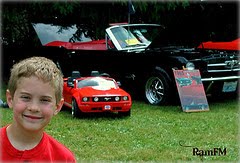
Sep 30, 2009

This Is the End - Martha Brockenbrough

The dying words of famous people
By Martha Brockenbrough

This is my last column for Encarta, a job I've had for nine years. In the grand scheme, that isn't a lot of time. But it does amount to more than half of my career and about a quarter of my life, not to mention hundreds of thousands of words.
For me, anyway, it's a big deal.

There's a lot of pressure to make my last words here great ones, which is why I've been thinking about the subject with the help of a delightful little book compiled by Ray Robinson called "Famous Last Words: Fond Farewells, Deathbed Diatribes and Exclamations Upon Expiration." I'm not the first writer to have a little morbid fun with other people's dying utterances.

The novelist John Green in "Looking for Alaska" made last words his main character's hobby. The ones he credits to Leo Tolstoy are perhaps my favorite: "The truth is … I care a great deal … what they …."

What does he care a great deal about? What is on the lunch menu? What they discovered living in his giant, puffy beard? We'll never know -- and I do love a good mystery.
Maybe even more appropriate for me is the novel "elsewhere," by Gabrielle Zevin. It's about a dead 15-year-old whose last word is "um" -- oddly fitting for someone fatally interrupted in the midst of age-appropriate confusion.

"Um" almost works here.

It's much more honest than "I am ready," the last gasp of President Woodrow Wilson. It's more appealing than "Get my swan costume ready," last uttered by the ballerina Anna Pavlova.

(Besides, my family owns a one-size-fits-all chicken suit, which is very useful for lessons in the difference between lie and lay.)

The question is: What do I really want someone else to say for me?
If I had regrets to express, I might quote the economist John Maynard Keynes, who said, "I wish I had drunk more champagne." If he'd lived to see this economy, he might have said a lot more. (Keynes was a big fan of public-works spending; it would be a celebratory thing.)

If I wanted to go for a good laugh, maybe I'd quote General John Sedgwick, a Union army commander.

"They couldn't hit an elephant at this dist-" he said, just before he was fatally shot in the face. But really, there's only so much comedy you can milk out of fatal face shootings. (Non-lethal face shootings are a much more fertile subject. See Cheney, Dick: fun hunting trips with friends.)

If I were totally unethical, I could quote Warren G. Harding, one of our most corrupt presidents (and coiner of the word "normalcy.") As he lay dying, he said, "That's good. Go on, read some more," which I could say was his endorsement of my goal with this column: to interest people in a topic and encourage them to seek more knowledge.

That would be taking things wildly out of context, though. Harding's wife was reading a puff piece about him in the Saturday Evening Post and he didn't want the flattery to end. Then again, maybe taking things out of context is the right unethical way to honor Harding.
I could go for a bit of gauzy poetry, too. Thomas Edison, inventor of the light bulb, illuminated his wife with a tantalizing message. "It's very beautiful over there," he said. (Was he going toward the light? Is heaven lit with 60-watt bulbs -- or more? And was Jennifer Love Hewitt's "Ghost Whisperer" there?)

I wish I could say that what's next for me with any certainty (beyond the compact fluorescent bulb, which is what I've stocked my office with). The truth is that the writer's life is much as the journalist and satirist Ambrose Bierce described in a letter before he disappeared in Mexico when he was 71.

"As to me," he wrote, "I leave here tomorrow for an unknown destination."

So do I, and this is one of the hardest parts about making a living with words. You really don't know what's next, and unless you're James Patterson, there's no such thing as a sure thing. But that's also what keeps it interesting. That, and the great exchanges I've had with my editors and readers. Those are the connections that turn the act of making a living into a life full of joy and meaning.

I think, though, my favorite set of last words comes from Karl Marx. It's especially appropriate given that my first real newspaper article, written for my college newspaper 21 years ago, was about his associate Friedrich Engels. The headline read: "New Marks from Engels" -- a cheesy pun that still delights me.
Marx said, "Go on, get out. Last words are for fools who haven't said enough."

I think that's good advice. And besides, I've had a glimmer of an idea about starting a whole new category of last utterances, one that reflects my work with the Society for the Promotion of Good Grammar.

So I'm not going to give any last words here. Instead, I'm choosing a final bit of punctuation, the one that shows an omission, a pause, or a thought that's trailing off, or more hopefully, marching ahead. So go ahead, read my ellipsis, however you choose ...

http://spotlight.encarta.msn.com/Features/encnet_Features_Columns_default_article_LastWords.html?GT1=27004
 

Free Blog Counter