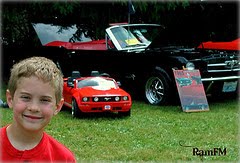
The driver of tomorrow is not thinking Green...

The driver of tomorrow is not thinking Green...
He's thinking Classic. (click on photo)

Followers

Jan 17, 2012

Are Sydne Spies of Durango High School's yearbook photos too racy? My response.

Looks like a modeling photo, She's absolutely beautiful. However, teens often forget that as they get older and come in to their young adulthood, a photo like this - it's not just the high school boys getting their attention. So it's up to the high school to step in and create a high school friendly book. We don't want our teachers facebooking with our kids, having relationships with our kids - we probably shouldn't put solicitous provocative photos in the yearbook. It all works together. As a female from a house of strong females and a mom of many daughters (one son, poor guy) - it is VERY difficult to balance being strong, comfortable in our femininity that includes sexuality without taking on the current societal view that we should allow AND EXPECT our daughters to BE sexualized. Is there anything else our girls could be? Worth as a female is still locked into our breasts/ass/physical perfection. In all these years, we still haven't developed past the feeling the need to achieve that and fighting for worth to others and our internal selves beyond that. Looking at the lifespan of humans, there is plenty of time to explore your sexuality and we push our kids to start out young. Feels a little pedophiliac to me at times. Create clothes at the age of 5 that are too short, too high, write words across our little girls butt to draw attention. The photos are racy, no doubt. And no man is looking at this parents daughter with "good" intentions. In fact, a man that thinks this should be encouraged with our young girls, should be looked at twice, three, four times. His intent is probably NOT the good of the young girl but more for his own visual gratification. I think at times women think they will control with sexuality but I'm not quite sure it really works out that way. It's a lonely road in the end for a girl/woman when she's given all she has. I was at a local football game recently and this man's teenage daughter walked up, in skimpy/short short, tight, glittery shorts. Nice body. Def flaunting it. I watched as his grown adult friend looked her up & down as she walked away and quickly averted his eyes when his friend turned his way. It made me a tad nauseous and validated my own parental choices with our daughters. Balance, balance. Maybe someday we'll find it.

http://mynorthwest.com/76/607027/Too-sexy-for-the-yearbook

Jan 8, 2012

AOM: The Thousandth Man

The Thousandth Man
By Rudyard Kipling

One man in a thousand, Solomon says,
Will stick more close than a brother.
And it’s worth while seeking him half your days
If you find him before the other.
Nine hundred and ninety-nine depend
On what the world sees in you,
But the Thousandth Man will stand your friend
With the whole round world agin you.

‘Tis neither promise nor prayer nor show
Will settle the finding for ‘ee.
Nine hundred and ninety-nine of ‘em go
By your looks or your acts or your glory.
But if he finds you and you find him,
The rest of the world don’t matter;
For the Thousandth Man will sink or swim
With you in any water.

You can use his purse with no more talk
Than he uses yours for his spendings,
And laugh and meet in your daily walk
As though there had been no lendings.
Nine hundred and ninety-nine of ‘em call
For silver and gold in their dealings;
But the Thousandth Man he’s worth ‘em all,
Because you can show him your feelings.

His wrong’s your wrong, and his right’s your right,
In season or out of season.
Stand up and back it in all men’s sight—
With that for your only reason!
Nine hundred and ninety-nine can’t bide
The shame or mocking or laughter,
But the Thousandth Man will stand by your side
To the gallows-foot—and after!

Hat tip to Gilberto C. for this Manvotional

http://artofmanliness.com/2012/01/07/manvotional-the-thousandth-man/?utm_source=Daily+Subscribers&utm_medium=email&utm_campaign=f38d118bec-RSS_EMAIL_CAMPAIGN/

Dec 16, 2011

The Plight before Christmas: Weisenburger

THE PLIGHT BEFORE CHRISTMAS

‘Tis the month before Christmas and all through the house,
Our two teens leave gift lists for me and my spouse.

They scribble and write, compose and compare,
In hopes that St. Nick has some big bucks to spare!

But Dad with his wallet and I with my purse,
Realize things have taken a turn for the worse.
Their lists once contained things that we could afford
But as they have grown, so the prices have soared!

Tinker toys and legos have all been replaced,
And items like play doh are simply erased.
Where once there was Elmo, and Big Bird and Pooh,
There’s now a cell phone, and an ipod too.

Gone are the days of toy cars and doll beds,
When visions of sugarplums danced in their heads.
Now they dream of two laptops (one’s hers; one’s his)
And something called a jump drive-- who knows what that is?!

It’s CDs, and sweaters, and watches and rings,
Computer and Play Station Games of all things.
A DVD burner will do just the trick,
Do they think money grows on trees for St. Nick??

More rapid than reindeer the items ring up,
We’ll have to get second and third jobs to keep up!
The deadlines draw nearer, the panic sets in,
I won’t get it all done! Where do I begin?!

Away to the bank I will fly like a flash,
To get an infusion of much-needed cash.
And what to my wondering eyes should appear,
But a bottom line that’s already too bottom-near.

There’s a twitch in my eye and an ache in my head,
Will my checkbook emerge alive or dead?
Which things do I get, for whom and how many?
Excess cash? I sure don’t have any!

So I think for a minute, and then start to smile--
The answer’s been with me, there all the while.

I take a deep breath and I slow myself down;
I cancel more plans to go into town.

Then I gather my children and with hugs and a kiss,
I remind them it’s not about presents and lists.

It’s about friends and family, and laughter and love,
And the blessings we’re given from God up above.

No matter what’s wished for or what gifts are sought,
Christmas is not about things that we’ve bought.

In the midst of the frenzy and the lure of the mall,
We shouldn’t forget….the greatest Gift of all.

So our presents get pared down to just two or three,
We’ll wrap them with love and place them under the tree.

And then I’ll exclaim ‘ere I turn in for the night,

“Happy Christmas to all, and….. may we all get it right!”


Copyright ©2008 Mary Beth Weisenburger All Rights Reserved.

You might be a parent of a teenager...

YOU MIGHT BE THE PARENT OF A TEENAGER IF…

Though I have only been living with teenagers for three years and am in no way an expert on adolescents, I have learned a thing or two about the metamorphosis from innocent tween to full-blown teen status. It can be a subtle shift, a change that sneaks up on you without advance notice. But there are some clear warning signs that signal you are now living with a teen. As a public service, I am offering the following easy assessment tool for any parent to use if for some reason you are not sure you have become the parent of a genuine, bona fide teenager.
You might be the parent of a teenager…

…If you spend more money every month on groceries, mainly consisting of pop-tarts, frozen pizza, ramen noodles, Doritos and chicken pot pies, than the Gross National Product of several third world countries;
…If you attempt to open the door to your child’s room and your entry is blocked by a mountain of wet bath towels;
…If you have suddenly lost all ability to make sense, your IQ has dropped dramatically and at times your attempts at civil conversation are considered so lame that you deserve only an eye roll in response.
You might be the parent of a teenager if you have to fight for time on your own computer.

You might be the parent of a teenager if your makeup, hair brushes and hair spray regularly disappears. Even if you only have sons.

You might be the parent of a teenager if your car’s gas tank is perpetually on empty, and can probably drive itself to the gym, the school and the pizza place on command.

If you have recently purchased any electronic item that starts with a lower case “i”, had to ask someone to explain what the initials BRB, LOL and TTYL mean; bought 3 pairs of tennis shoes in 3 different sizes in one year for the same child; and you hear a “cha-ching” sound in your head and automatically reach for your wallet whenever they approach, you might be the parent of a teenager.

You might be the parent of a teenager if you can’t get your kids to go to bed at night or get up in the morning; the decibel level for simple questions such as “Do we have any milk?” rivals that of the landing strip at O’Hare airport; and you have often chosen to completely discard an item of clothing that has resided in the dark, dingy corners of a gym bag for far too long rather than let it contaminate an entire load of wash.

This is not an all-inclusive list, of course. I have heard other descriptions that include things like body jewelry and tattoos. But, if you feel compelled to cut out this article and hang it on your refrigerator door, amidst Zits cartoons, orthodontist appointment cards and the outrageous car insurance bill, well, congratulations my friend. You truly are the parent of a teenager.

Mary Beth Weisenburger lives in Putnam County with her husband and two authentic, full-blown teenagers.

Ken Davis: Grandparents

"I have granddaughters. When they enter the room, they run straight to me. They fly through the air, on angel wings, on fairy wings. I scoop them up and they whisper in my ear "I love you Grandpa".

I have 2 demon possessed Grandsons. They do not fly through the air, they do not slow down, they don't leave the ground. 65 miles per hour - they put their head down. "What's wrong?" they ask. "Grandpa has fallen and can't get up". There is nothing so painful as being greeted by your grandsons.

Grandchildren attack without warning - and I love every minute of it."

Ken Davis, Comedian - Lighten Up & Live

Dec 2, 2011

Adam Carolla's Occupy Wall Street Rant

I'm not familiar with this guy. But I heard a snippet of his rant on Dori Monson today, complete with beep, beep, beep & agreed deeply with his points. We are raising and living with a self entitled environment. And it's making us weak as a nation, as a society, as humans.

Song of the Day: All I Want - Chapman

Hedy Lamarr: Genius

http://www.slate.com/articles/arts/books/2011/11/richard_rhodes_hedy_s_folly_reviewed_what_was_the_source_of_hedy_lamarr_s_inventive_genius_.html

Nov 11, 2011

Why children don't tell

This was my response to Dave Ross making a direct connection to sexually abused kids and it pointing to something wrong at home, because kids don't go & tell their parents what's going on.

The guy was preying on children at an age that weren't quite aware of sexuality and what that all entails. If you have any knowledge of sexual predator behavior, they are very sly. This guy was typical. Centered himself with kids, parents automatically "trusted" him with their kids because of the U, the program, his fame. Abuse, sexual abuse especially, is often connected with shame. These boys were at an age where either they didn't have a clue about sexuality yet (7/8) or they were JUST entering the age of perhaps, someone might have started to explain (10 years old, just entering that realm). The two eye witness sexual episodes were with 10 year old. The older kids seemed to have more of an idea what he was doing and they did extricate themselves from him and the program. I think he picked this age group because of their non understanding of what that was all about. Kids, from all sorts of homes, keep stuff from their parents. Especially if they feel like they've done something wrong. Sexual abuse victims live with shame their entire lives sometimes and often hide the event(s) for years. Good parents or not, abuse happens.

However Dave, I do agree with you that way too many fathers are abandoning their children & their responsibilities. This program was for at risk kids and probably, several sons of single mothers, who put them in this very prestigious program with well known famous coaches because they recognized their sons needed a male figure - and they probably felt lucky, blessed to have their son there. However it's wrong to make an absolute statement that any child who doesn't come forward doesn't have something solid at home. Look at the Catholic church - how many of those boys hid what was happening and probably had very devout fathers at home.

This story sickens me, not only because of the vileness of what happened, but because what does it do for all the kids out there that do have a need? How does a parent feel safe enough to send their kid to any program, religious, not religious and know their kid is okay? How many years did the church cover up their story? And look how many years this guy was allowed to continue harming & having contact with kids - both situation because of power. Unfortunately as a parent, it strips your ability to trust anyone that might be nice to your kid and as an adult, makes you shy away from volunteering in a program and/or being nice to a kid.

Sep 29, 2011

Art of Manliness: Gentlemen at the Office

The rules of business etiquette are very similar to the rules of social etiquette.

But there is a difference between the two sets of manners.

In the social sphere, the assumption is that you and your associates are equals, with some allowances made for age and sex.

The business world, on the other hand, is a hierarchy. Whether you work at a traditional, highly-stratified corporation, or a modern and casual upstart, whether the hierarchy is spelled out, or entirely unspoken, one exists. Just step on some toes and see what happens. Business etiquette dictates that employees defer to employers, sellers defer to buyers, and seekers defer to sought-afters.

This difference in the dynamic of social and business relations accounts for things like the fact that when you make introductions outside of work, you always introduce the man to the woman, while in the business world, you make introductions based on rank and importance, regardless of gender. So if you’re introducing a male CEO and a female employee, you would say, “Mr. Robert BigCheese, I would like to introduce Mrs. Samantha Underling from accounting,” rather than the other way around. (Note: if Mr. Graham was meeting a client (of either sex) as opposed to an underling, the client’s name would go first; remember, the seller defers to the buyer.)

This is also why your boss can call you by your first name, but you shouldn’t reciprocate, unless he or she has specifically invited you to drop the Mr. or Mrs.

Another difference between the rules that dictate etiquette in the social and business worlds is that in the social sphere, etiquette doesn’t necessarily have to be efficient or practical; in fact, this can be part of its charm. But in the workplace, tradition matters less and getting the job done matters more.

So for example, while in a social situation you would want to stand when a woman entered the room, at work you should rise from your desk when receiving visitors of either sex, and you shouldn’t stand up every time a female secretary or assistant walks in and out of your office.

Those caveats aside, the rules of business etiquette and social etiquette are not so different; it’s all about acting with integrity, knowing the appropriate behavior for a particular situation, behaving in ways that show respect, and treating others as you’d like to be treated.

While certain areas of business etiquette deserve their own posts, today we will outline some general dos and don’ts for being a gentleman at the office.

The Dos

Dress with respect. Be clean and presentable each and every day. Follow the office dress code at a minimum—and don’t be the guy who constantly toes the line. Of course it’s fine to dress a cut above everyone else, but just a cut. Dressing up far beyond the standard sported by everyone else will come off as putting on airs.

On another style note, while you might take off your jacket and roll up your sleeves during the day, when there are visitors present in the office or you’re receiving callers, put your jacket back on and present a professional appearance that reflects well on your company.

Come to work with teeth brushed and body washed. Your co-workers are stuck with you in a small space for eight or more hours a day. Don’t make them avoid your cubicle like the plague as they gather to discuss whether presenting you with a gift basket of soap and chewing gum would send too overt a message.

Keep things pleasant with your co-workers. Unlike friends, if things get awkward with your co-workers, you cannot choose to stop seeing them. No, cause an uncomfortable rift with a co-worker, and you’ll have to look at their contemptible face each and every day for months, and maybe years. So keep your relations with them pleasant. This means not delving too much into your private life, avoiding discussion of topics like religion and politics, and typically choosing to ignore annoying habits, rather than calling attention to them (although every man has his breaking point).

When it comes to dating at work, don’t risk it unless she’s someone you truly connect with. And if you do pursue something with a co-worker, review your company’s policy on such relationships and let HR know what’s going on.

Keep company secrets, secret. Our Wiki-leaks-loving generation tends to scoff at the notion of keeping anything secret. And yes, your company’s secrets may seem so boring or unimportant as to not even be worth the effort of keeping them under wraps. But no matter—they’re still nobody’s business. Even if the spilling of secrets doesn’t cause actual harm to your company, doing so will still make you look careless.

So keep your files tucked away when receiving visitors, guard your end of the phone conversation when a visitor is standing nearby, and if outsiders ask you questions that might reveal company secrets, simply give intentionally vague answers–never volunteer any information they could not have otherwise been gleaned from the news. If information is truly confidential, don’t send it over email. There’s no such thing as a “private” email; they can be monitored by your company, and sometimes retrieved long after they’ve been “deleted.”

Finally, don’t volunteer more information than necessary: “Dan is not in today,” not “Dan’s not here. He’s meeting with the head of mergers at Dyna Corp.”

Work with your boss—not against him. Keep him informed. Let him know when you’ve made a mistake so he doesn’t paint himself into a corner out of ignorance. Back him up–if you have concerns about something, let him know in private instead of airing your grievances at an open meeting.

When you use the last of something, replace it. Whether it’s the last paper in the copy machine or the last cup of joe in the coffee maker, don’t just walk away—replace the paper and make another pot. Ditto for copy machine paper jams—don’t whistle as you slowly slink off. Fix it.

Treat your underlings with kindness and respect. They keep the office running. And you never know if that lowly clerk will one day be your boss.

Respect the chain of command. Both up and down. Don’t step on anybody’s toes. Don’t go over your boss’s head without permission.

Hold the door for people approaching the elevator. Don’t hide in the corner while secretly wishing for the doors to close as quickly as possible.

If you’re using speaker phone, let the person(s) you’re speaking with know who else is on the call with you before you begin the conversation. That way, they will not be confused when another person’s voice suddenly pops in later on.

Bring donuts or bagels to a meeting every once in a blue moon. This is not expected of you. But if you do it, you’ll be a hero.

The Don’ts

Pass the buck. Generally, making excuses reflects more poorly on your character than admitting the mistake would have on your competence. If you blame an underling, you reveal yourself to be a mediocre leader, for you should have seen to it that the job got done correctly. If you blame an equal, you simply look like a whiner and run the risk of souring your relationship with someone with whom you’ll likely have to continue to work. And if you blame a higher-up…well common sense dictates that it’s not a good idea to anger the people who hold your job in their hands.

Come late to meetings. Your late arrival is disruptive and may prolong the meeting if they have to wait to get started until you get there or if they have to catch you up on what has already been discussed.

Linger at someone’s desk.
Nothing wrong with stopping by to say hello to your cubicle buddy. But, if after some brief chit-chat, your co-worker shows signs of trying to get back to work, move on!

Eat other people’s food. The crime that launched a thousand passive-aggressive notes.

Eavesdrop on co-workers’ private phone calls. Now obviously if someone is having a conversation a cubicle over, it’s impossible not to hear what they’re saying. But you can certainly pretend like you don’t hear. In other words, if Bob just got off the phone from having an argument with his teenage son, don’t saunter over and ask, “What’s the problem with young Johnny, Bob?” If your co-worker wants to bring up the topic with you, then let him initiate that conversation. Otherwise, consider what you heard to be off-limits.

Listen to radio/music/Youtube videos without headphones. Not everyone shares your affinity for Enya.

Let your personal life get in the way of your business life. Always maintain a business-like attitude. This doesn’t mean being cold or aloof from others. What it means is that your personal life should very rarely interfere with getting work done. Not that you can’t leave early because your kid got sick, but that you don’t come in late because you got plastered the night before, you don’t ask the boss for a raise because you just had a baby, and you don’t spend half your time at work arguing with your ex-wife about alimony payments.

Come back and visit your old office. And now we return to the point made at the beginning of the article: the business world is different from the social world. In the social sphere, when you make close relationships, the expectation is that those relationships will last no matter where life takes you. At the office, you might develop relationships that feel very close with your co-workers, but once you move on, those relationships typically do too. When you leave a company to take another job elsewhere, don’t come back to your old workplace expecting to be heralded as a long lost friend. People will find the situation a little awkward and you a good deal lame.

Sep 22, 2011

My question for President OBama

My husband and I have 5 kids together, ages 17 - 9, of which I am the sole support since my husbands industry crashed with the economy and work is not yet to be found. The State actually told me in regards to child support from my children's biological father, they wanted to create a "win-win" situation by reducing his support to basically nothing. This is suppose to not overwhelm him and give him incentive to pay something, while day in and day out, I strive to continue to provide a home and basic necessities to our children. That State told me to go to my residence State and apply for assistance for our children. Really? This is the answer? How does this possibly help our bankrupt states & country, by removing the responsibility from the citizens for their children and making it the government's responsibility to provide?

Despite this, I work very hard to find every opportunity for growth and education, around some of the failings of our own education system, for all of our children so they can grow to look beyond their own selves, to a world in which they are set to live in. We live in this place of market, market, market - we've lost the ability to provide for ourselves, produce our own food, make our own items, who sews clothes anymore?, build our own homes - and so any necessity - or any extra opportunity costs money. Driving to work costs money. Travel and commuting has become such a way of life, community is lost. Millions of people are out of work, who are skilled, who have something to offer others and yet, instead of banding together to bring our wares to the table to create community provision, we sit in our homes, wondering how we are going to purchase the next dozen eggs or put gas in our car to make it to work.

My question is not what are you directly going to do for our country. Presidents are simply human beings who are able to figure out how to get themselves elected to the head of this country. My question is where is our country going? We cannot possibly continue to spend the money we are spending. Our governments cannot possibly afford to continue providing for everyone who doesn't. There are many who choose not to, who look for handouts. We give to them and penalize those that do, that get up every day and continue to work, continue to try and educate the next generation, even though that education has a cost that may be overwhelming. Our focus as a nation in many areas has turned to MONEY. Therefore, money/economy must be created. Yet we lose our manual ability to care for ourselves and become completely reliant upon the government, who in turn, becomes bankrupt as population explodes.

There is something to be said about being able to pay your doctor bill with a chicken and working it out in the neighborhood.

What is the government going to do to unite us as the United States of America, instead of the division that is driving us apart and weakening us?

When Your Child Won't Listen - Lorri Craig

Well, I know it's a shocker, because we seem to have this family thing all figures out (NOT!) but this is an all too often problem in our household of 5 kids. From 9 to 17 and sometimes the 42 & 43 year old kids don't listen either, our kids have selective memory, selective priorities. Just last night I was venting to Ryan, "Why is it I have to ask 4 or 5 times before you do it? JUST DO IT!" To which he responded "You don't have to ask 4 or 5 times, just twice" Obviously the logic portion of his brain is still not developed and it's a good thing he said that from the other room. He's only 10 and already exhibiting his 15 year old sister's teenage feedback. I tensely responded, teeth clenched "I should only have to ask ONCE and out of the love of you heart, you should do it!". It's not as if brushing your teeth & getting ready for bed is a surprise every night of your life.

Anyway, talking with Matt this morning on the phone, I'm in the office, he's at home with our 2 youngest, he interrupts to admonish one of them for a pretty serious non listening offense. Are we normal? Does this happen in other homes? Did my parents generation and their parents generation have it figured out with corporal punishment? Sometimes, I see the advantage. Yet, having children who (please don't tell them this) are at times smarter than our aging & haggard brains, corporal punishment has been semi useless so we've changed tactics. And changed again. To just everyday parental frustration, followed by "one day they'll be gone and I'll wish for this moment back so try and enjoy it....how important is it really... " and a million other musings. That's just me. Matt just gets by it & moves on, not lingering on the possible negative after effects into their adulthood like I stew over.

So this brings me to the article I'm sharing this morning. I LOVE her point that CHILDREN ARE NOT LITTLE ADULTS! THEY ARE KIDS! Hello!!!! I also liked her point about dealing with it calmly, quickly, efficiently and move by. One day, they will be gone so try to enjoy them through the frustration. And the strong ones? They want to not only lead their own lives, parents, teachers, friends, any human in their vicinity - they want to lead the world. Someone has to.

Most parents would agree, a child who won’t listen can be incredibly frustrating, particularly when you are trying to teach them right from wrong. How can they learn to behave if they won’t listen?

When parents complain to me that their children ‘never listen’, my usual response is a slightly cheeky, ‘Well then, stop talking so much.’ Having someone lecture at you can be very annoying, whether you are a child or an adult, so kids learn to turn off their ears and brains in response, or, worse, they defiantly rebel.

Why Questions


In amongst the lecturing, the frustrated parent commonly asks, ‘Why?’ “Why did you throw that rock?” “Why did you put peas up your nose?” “Why did you jump up and down on the bed until it broke?” “Don’t just shrug. Look at me! Why aren’t you listening to me?!”

I have a why question. Why do so many adults feel compelled to ask children why questions? Be honest, when was the last time you knew the answer to your own why questions after doing something silly? “Why did you have that extra drink last night?” “Why did you buy those expensive shoes that hurt?” The only honest answer would be, “Well, it seemed a good idea at the time,” or, “Because I wanted to,” or, “I don’t know.” Unfortunately, such honest responses are not likely to appease an angry parent in full-on lecturing mode.

Children Are Not Little Adults

Tom Phelan, author of ‘123 Magic’, stressed that children should not be treated as ‘little adults’; because they are not: they’re kids. A young child is not likely to have great philosophical realisations about good versus evil by being talked at and reasoned with. What they are more likely to do is stop listening and think about something more pleasant, like that new toy they want for Christmas.

They might, if well trained in escape tactics, appease you with an eyes-down, submissive nod, perhaps accompanied by a mumbled apology, and of course, when prompted, promise to never do it again. But more often than not, unless they have an unusually strong urge to please you, they won’t really mean any of it. They are simply trying to cope in that moment. After all, they’re kids.

Lecturing and reasoning with your child as if he is a little adult on your level reduces your power and status in the child’s view. At times the lecturing might create a quietly angry child who will retaliate later, or take their anger out on a younger child. At other times the lectured child might react angrily towards you. They are only responding as they feel a little adult should.

The Angrier You Get…

As a parent it can feel really frustrating to hear your little darling argue back disrespectfully rather than offering the meek apology you’re hoping for. This frustration might lead to an increase the loudness and tone your voice. Then, because your child tends to mimic you, and because you are giving them focused attention for their retaliation, and because your anger has, in their world, given them more justification for being angry, the child gets angrier at you. Then you get angrier in response, and so it goes on. This is called escalation, and it is very common in families.

Be a Calm Assertive Pack Leader


I believe one of the greatest contemporary human psychology experts is dog behaviour expert, Cesar Millan, star of TV’s ‘The Dog Whisperer’. Millan does not believe in reasoning with canines. Instead he stresses to his adult human clients that they can train their out-of-control dogs by becoming strong ‘pack leaders’, and exuding ‘calm, assertive energy’. If a pack leader is calm, confident and assertive, his pack will feel confident that he is looking after them and protecting them from harm, so they feel relaxed, secure and well-adjusted. The pack doesn’t have to challenge the pack-leader’s authority and they don’t feel threatened by the outside world, as long as the pack leader stays relaxed.

‘Calm, assertive energy’ is Milan’s constant mantra; a mantra that I have been encouraging parents of humans to take on for many years.

If you believe that you, as a parent or parents, should own the role of leader in your family [solo as a single parent, or in partnership with another parent in two parent families], and you can get into the calm, assertive mode of a good pack leader and set clear limits for your children, they will automatically feel calmer and more secure, and be much easier to manage.

Millan teaches that a pack leader in the dog world does not talk in response to their charge lings’ misdemeanours. Nor does he react aggressively. He simply corrects the unwanted behaviour, calmly and assertively, then lets the issue go. He doesn’t harp on and on, he doesn’t try to reason, he doesn’t get angry, and he and definitely doesn’t give the unwanted behaviour too much attention. Dogs are so smart.

Human are also social pack animals, and human children thrive on solid adult leadership, and clear boundaries and consequences delivered in a calm, assertive manner. It helps them feel like the world is predictable and simple, and this helps them feel secure. The internalisation and development of adult values comes later.

Calm Clear Consequences


So, when your child is doing something wrong, try not to lecture, or ask why, or get angry in response. Instead, focus on exuding calm assertive energy, and quickly and firmly correct the behaviour, then get back to life. Mild misbehaviour can be corrected by a firm look, or a calm assertive, ‘Hey, that’s enough’, with a moderate to deep voice. More serious misdemeanours can be corrected with clear simple consequences. Thomas Phelan talks about using counting with simple time out consequences his 123 MAGIC series of books and videos. I will talk more about the Phelan system, along with ways to deal with the more out of control child, in separate training articles and video blogs.

It is important to always stay aware of your own emotional response and avoid reverting to anger or fearful submission. Assertive parenting is neither. Assertive parenting is relaxed but strong posture, calm body language, moderate voice tone and loudness, and clear, calm eye-contact. It is brief and to-the-point and very matter-of fact. It is the language expression of a powerful leader who knows she is in charge, so doesn’t have to try too hard.

So, in a nutshell, the keys to managing your child’s behaviour are:

*Remember your child is a child, not an adult
*Project calm and assertive leader energy
*Do not lecture or try to reason with your child
*Don’t ask ‘Why?’ questions
*Do not get angry or argue
*Do not give your child too much attention for not listening or misbehaving
*Stick to clear consistent consequences

And, most importantly, try to lighten up and have some fun with your children. They aren’t children for long, and one day you’ll wish you had.

Good luck with this challenge. I welcome any feedback, questions, or ideas.

Lorri Craig,
Psychologist

Please leave questions or comments in the COMMENTS box below, or email me at Lorri@lorricraig.com. I will try to respond as quickly as possible. For more parenting tips, and for links to Tom Phelan’s brilliant parent training DVDs, check out my parenting site www.ChildTrainingSecrets.com.

Sep 16, 2011

I Hate You - Don't let it pass

What should a parent do when a young child says, “I hate you?” I’m Dr. James Dobson with My Family Talk.

Some givers of parental advice recommend that parents ignore these kinds of violent outbursts and expressions of hostility for a mother or father. I disagree. Even though it is true that most youngsters do have strong feelings, and it’s not unusual for them to verbalize their anger. Still, we need to teach children how to handle those emotions more appropriately. If a child screamed his hatred at me for the first time, I would wait until his passions had cooled and then I’d convey a message that would go something like this: “I know you were very upset earlier today, and I think we should talk about what you were feeling. All children get angry at their parents now and then, especially when they think they’ve been treated unfairly. But, that doesn’t excuse you from saying, ‘I hate you.’? You see, when people love each other as you and I do, they shouldn’t want to hurt each other. What you said hurt me; just as it would hurt you if I said something like that. Now you can tell me what angers you and I’ll listen carefully. And if I’m wrong, I’ll do my best to change the things that you don’t like. But, I can’t permit you to call me names or speak disrespectfully to me in that manner. Now is there anything you need to say to me? If not, then put your arms around my neck because I love you.”

See, once this boundary has been established, I would then expect the child to live within it. With My Family Talk, I’m Dr. James Dobson.

Sep 15, 2011

Will, Grace, Love, Mercy. No, not a new comedy.

The Will of God took His only Son to a place where even Mercy could not be found. But Love retrieved Him from the enemy's lair, simply for Grace to exist for us.

Sep 8, 2011

Marriage Marathon

Don't forget to sync your heart monitors, adjust your speed, match your timing and keep each other in sight. If one jets ahead or one lags behind, drop a leg and pick up a cheering arm.

Aug 23, 2011

Remove the adults, keep the kids

In response to the recent new story about the restaurant that bans children and a local discussion online about kids in public.

Not all people with children are breeders. And not all breeders are irresponsible parents. Talking w/a school official recently, they mentioned in all their 30 years of education, this group of elementary kids had the most sense of self entitlement and immaturity they had seen. Being involved with a wide range of kids, we've been recently shocked at the growing disrespect, rudeness and self-centerdness that is developing in the younger generations. The change in attitude of parenting, don't have expectations, don't teach good manners, good behavior - let the children "find their way" and be how they will - is fine at home. But when kids go to other people's homes, in public and still think they are THE center of the universe and have absolute NO consideration for other people - that's when it's gone too far.

I've had to remove my child from a public place in the middle of a melt down. That's what we should do. No, not everyone chooses to have children. But not everyone chooses to drink too much in public either. Or become belligerent, rude, use profanity, wear too little clothes, act badly in public - I'm talking adults here. And no one takes them out of the restaurant when they do so I can enjoy my dinner. If I've paid for a babysitter, I don't want some adult ruining my peaceful time. With todays economic times, many parents NEED a break, they need out of the house but who can afford a babysitter? We've created this transient society, where people live hours away from family and may not have anyone to trust their child with. So some may choose to chance it and yes, endure their own internal stress, when you need a night out, YOUR child is the one not sitting still and all you want is that good meal, see another adult, act like you're not a spitup rag.... I'm glad mine are old enough but having been through it, gives me a little more understanding.

Aug 17, 2011

Letting Go of the Remote - PluggedIn

Excellent.

"We flicked on the television and inserted the DVD. We were all settled in, my family and I, around the screen for a movie night—remote at the ready. But before my son pushed the play button, he turned to me and asked, "You're sure this meets with your approval, Dad?"

The movie: Disney's G-rated The Great Mouse Detective. The audience: Colin, my 20-year-old son; Christy, his wife; and Emily, my 17-year-old daughter.

"Don't be snide," I told him with a roll of the eyes. He snickered and smiled as he started the disc, and for the next hour or so, the room was filled with sounds of laughter and stage-whispered asides as Basil of Baker Street tried again to bring Professor Ratigan to justice.

I'm glad to say that my family room is still a noisy place sometimes, and will be for just a little while longer: Colin and Christy are living with us while they finish college. Emily—sometimes with boyfriend in tow—hangs out with us more than my wife and I probably deserve. Even though our kids are older, they still—oddly enough—seem to like to spend time with family.

Maybe they feel sorry for us. Maybe they sense that we're already missing them a little, even though they're still right here. Maybe they know that, in barely a blink, barely a beat, they'll be on their own, leaving us with a house of empty rooms.

What it means to be a parent changes over time. From the day our kids are born, we train them to leave us. We teach them right and wrong in the hopes that when they have their own careers and families and rents to pay, they'll remember the lessons instilled into them.

We all must eventually trust our children with what we've taught them.

But when does the teaching end and the trust begin? Do either begin or end, really? And what happens if you taught your kids the wrong sorts of lessons?

Trials and Errors
Being a father has been perhaps the greatest joy of my life. But it was, quite frankly, an unexpected joy. My wife, Wendy, and I had Colin when we weren't much older than he is now. We were young and stupid and poor, needing help from my parents just to keep the kid in diapers. We learned how to be parents through rigorous on-the-job training, and we made plenty of mistakes along the way.

You can ask my kids for the details if you'd like. I'm sure they could give you a pretty good breakdown of all our parental failings. But from my perspective, nowhere were our child-rearing hits and misses so obvious as when it came to entertainment.

I had never even heard of Plugged In (or Parental Guidance, as it was called) back then, but even as a young, frightened father, I had an almost instinctive urge to keep my kids away from certain forms of entertainment. Movies were a rarity for us. And I wielded the television clicker with an iron fist, extinguishing any show that I deemed inappropriate for my young 'uns. No Seinfeld at our house, and the only friends we saw were of the Barney variety. Blue's Clues and Wishbone were family faves, and we watched a whole lotta VeggieTales videos.

So it's safe to say that we were pretty diligent with what our kids watched. How much they watched it … well, that's a different story.

At first we set down firm rules that no one in our house—not even Wendy and I—would watch more than an hour of television a day. And for a while we were able to keep to that. But parenting is messy business, and sometimes the best-intentioned rules don't stand up to day-to-day reality. Wendy was working. I was working. And by the time we all got home, there were days when nothing looked quite so appealing as a nice, quiet evening in front of the tube.

We started making exceptions, then finally let the rule dissolve. Of course, every few months guilt would overcome us and we'd make another hour-a-day commitment. Then we'd regress again.

And video games turned out to be even harder than TV. I enjoyed 'em—even some of the violent ones—and I didn't understand why, at the time, I should give them up. We had given up so much for our kids, after all … couldn't I have this one thing?

But Colin, he wanted to spend time with his dad. And so, on the occasional Saturday afternoon, Wendy would walk in on me engaged in a virtual shooting game, our 3-year-old watching it all while sitting on my lap.

Truth and Consequences
For those who don't believe that setting entertainment guidelines for your kids early is important, look to me as a cautionary tale. Because every single one of the lessons we taught—even the unintentional ones—took root in our children.

While I eventually gave up my violent video games, I didn't stop playing games altogether. And, for better or worse, it became a medium over which Colin and I bonded. We played a whole season of virtual baseball one winter, and by the time he turned 14 I couldn't beat him in anything anymore. But he almost liked watching me play more than he liked to play himself (keeping stats, for example, while I raced Gran Turismo cars). To this day he'd rather sit at my shoulder than grab the controller. And I can't help but wonder if I programmed that into his tiny noggin when he was 3.

Another problem area in our household: The television, in my estimation, is still on far too much. Because we didn't push it to the side, the tube (now a widescreen behemoth) flopped itself down into the middle of our family room and became almost one of us. And there's something a little disturbing about that.

But because we never got into the habit of watching the latest and not-so-greatest drama or sitcom, we still don't watch "must-see TV." And that's something, I guess. As a family, we've actually followed maybe four television series over the last 20 years. Instead, we gravitate toward tune-in-anytime TV—documentaries, cartoons and "educational" reality programming.

And for us, it really is a family activity. We watch it together, talk about it together. When we watch a movie, we chat about it afterwards, dissecting its strengths and weaknesses, its moral high points and ethical failings.

Well of course you do! you might be saying. Look at where you work! But the truth is, we've always engaged, as a family, with what we watched and listened to and played. It's become part of our DNA. In some ways, I think we're pretty lucky: Because we've been so involved with our kids' entertainment choices, they still want to share their favorite entertainment with us—even if it's not the sort of thing Wendy and I would like or appreciate or even heartily approve of.

Relinquishing the Remote. Slowly.
Hey, we still have entertainment rules at our house. We have a system in play now where, on a family movie night, we rotate who gets to pick the film: Colin gravitates toward weird little indie flicks, Wendy to summer blockbusters, me to old-fashioned classics. But I still have veto power. Emily's technically old enough to watch anything … but I'm still protective of her, and if Colin suggests a film that falls too far outside my comfort range, he knows we're not going to watch it—hence the little jab about The Great Mouse Detective.

But I don't get to tell Colin and Christy what they can watch when they're in their own little downstairs apartment. Though I do tell them, in my own way, what they should.

"That's a horrible show," I'll say with a smile if they tell me about the latest episode of fill-in-the-blank. "Why don't you watch some old VeggieTales videos instead?"

These encounters are not dramatic heart-to-hearts, not tearful sit-downs or serious guilt trips. Colin's an adult and married to boot, and it's not my role to tell him what he can or cannot do anymore. But he's still in my sphere of influence and still, in his own way, asking for my input. I still have a role in his life, and I hope that these light, jokey conversations will be remembered by him down the road, when he and Christy have their own children to watch out for.

Meanwhile, my interactions with Emily look completely different than with Colin. He's always enjoyed pushing the proverbial envelope; Emily's entertainment tastes are, if anything, even more conservative than mine. At the age of 12, she refused to watch a me-approved PG movie because she felt its morals were askew. And looking back, I think she was right. I don't monitor her entertainment choices as much these days because I trust her: She's earned it. Perhaps someday she could apply for a job at Plugged In.

Lessons Learned?
I didn't do everything right as a father when it came to making wise entertainment choices for my kids. Much of what I did at 24 I'd tsk-tsk at 42. So even now, in this late stage of parenting, I'm trying to rectify past mistakes. I'm trying to cut down on the time we spend in front of the television, for one thing. Some nights I'm trying to ask if anyone wants to play a game or go for a walk. On others, we do flip on the telly, but we watch Wendy play a video game—and since she still hasn't mastered all the myriad buttons she needs to push, that can be a pretty entertaining diversion.

But I'm proud to say that I think my kids have learned not to merely absorb what they watch or listen to. And there's something to be said for that. Actually, there's quite a lot to be said for that.

It's good to place limits on your children's entertainment consumption. It's great to make sure that the messages they're getting, particularly early on, are solid and moral and, ideally, biblical. But we have to remember that we can't censor or even monitor the world for our children indefinitely—as much as we'd like to. We can't protect them from everything they're likely to encounter.

We can help them process it, though. We can help them talk about it.

So the answer to my first question about where the teaching ends and the trust begins is … 42. No, not my age. The idea that it's unanswerable. Every kid is different. Every family unique. But I can answer this question: When do you stop trying to teach lessons as a parent? Never."

http://www.pluggedin.com/upfront/2011/lettinggooftheremote.aspx
Jul 28, 2011

Song of the Day: Courageous, Casting Crowns

A new song from Casting Crowns. I heard it today and it gave me goosebumps. A call to men - be men. This is what stirs your woman's heart.

We will reignite the passion, may the watchers become warriors. Let the Men of God Arise!


We were made to be courageous
We were made to lead the way
We could be the generation
That finally breaks the chains

We were made to be courageous

We were warriors on the front lines
Standing, unafraid
But now we're watchers on the sidelines
While our families slip away

Where are you, men of courage?
You were made for so much more
Let the pounding of our hearts cry
We will serve the lord

We were made to be courageous
And we're taking back the fight
We were made to be courageous
And it starts with us tonight

The only way we'll ever stand
Is on our knees with lifted hands
Make us courageous
Lord, make us courageous

This is our resolution
Our answer to the call
We will love our wives and children
We refuse to let them fall

We will reignite the passion
That we buried deep inside
May the watchers become warriors
Let the men of god arise

We were made to be courageous
And we're taking back the fight
We were made to be courageous
And it starts with us tonight

The only way we'll ever stand
Is on our knees, with lifted hands
Make us courageous
Lord, make us courageous

Seek justice
Love mercy
Walk on. be with your god
Seek justice. love mercy
Walk on. be with your god

In the war of the mind I will make my stand (seek justice. love mercy. walk on. be with your god)
In the battle of the heart and the battle of the hand (seek justice. love mercy. walk on. be with your god)

In the war of the mind I will make my stand (seek justice. love mercy. walk on. be with your god)
In the battle of the heart and the battle of the hand (seek justice. love mercy. walk on. be with your god)

We were made to be courageous
And we're taking back the fight
We were made to be courageous
And it starts with us tonight

The only way we'll ever stand
Is on our knees, with lifted hands
Make us courageous
Lord, make us courageous

We were made to be courageous
In the war of the mind I will make my stand (seek justice. love mercy. walk on. be with your god)

Lord, make us courageous
In the war of the mind I will make my stand (seek justice. love mercy. walk on. be with your god)
 

Free Blog Counter